ClickCease

Why Use a Lightning Arrestor?

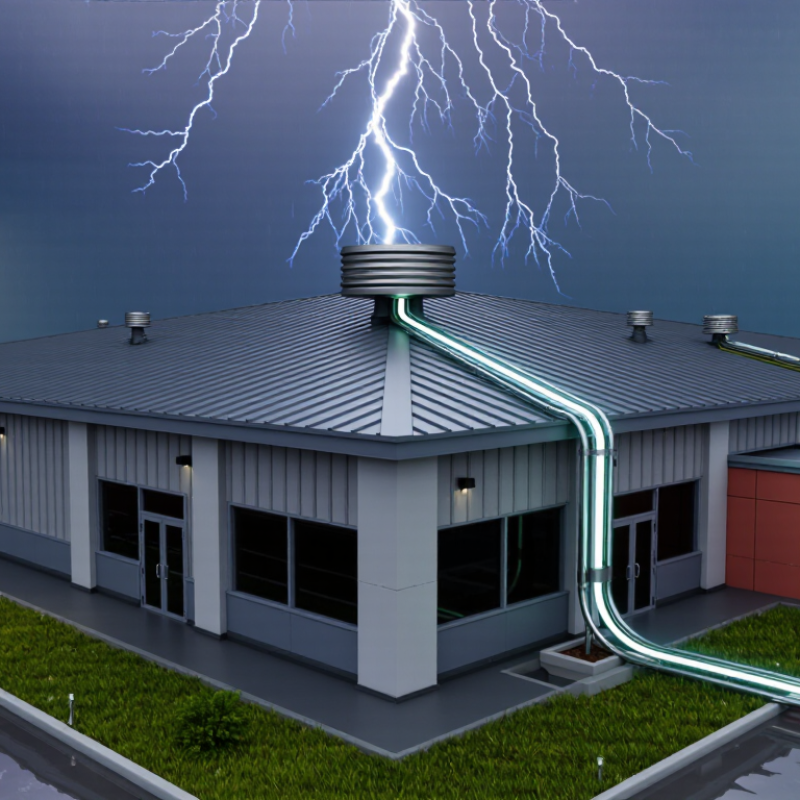
A Lightning Arrestor is not a decorative rooftop accessory. It is part of a coordinated protection system that helps control dangerous surge energy during a lightning event. When a strike reaches a building, current may travel through metal roofs, wiring, plumbing, or communication cables. The result can include fire, equipment failure, structural damage, and costly downtime.

The risk is measurable. According to the NFPA report “Lightning Fires and Lightning Strikes,” U.S. fire departments responded to an estimated 22,600 lightning-caused fires annually between 2016 and 2020. These fires produced approximately $451 million in direct property damage each year. The report also recorded average annual losses of nine deaths and 56 injuries. Small numbers can still hide serious consequences.

Lightning expert Martin A. Uman described lightning as “a gigantic spark that connects the earth and the cloud.” That image explains why protection requires more than a single metal rod. NFPA 780 and IEC 62305 emphasize air terminals, bonding, grounding, and surge protection as coordinated elements. A properly selected Lightning Arrestor provides a controlled path toward earth, reducing the chance of current passing through vulnerable equipment.

No protection system is perfect. Installation quality matters greatly. Soil conditions, building height, cable routes, and maintenance can change the outcome. Vaisala’s annual lightning reports also show that lightning activity varies widely by region and season. Ignoring local conditions is an easy mistake. The safer approach combines professional design, verified components, and regular inspection. In practice, that may prevent one brief flash from becoming a long business interruption.
Why Use a Lightning Arrestor?

What Is a Lightning Arrestor?

What Is a Lightning Arrestor?

A lightning arrestor is a protective device for electrical systems. It limits sudden voltage surges caused by lightning or switching events. The device connects between a power conductor and the grounding system. During normal operation, it remains mostly inactive. When voltage rises sharply, its internal components create a safer path toward ground.

It does not stop lightning from forming. It does not replace a lightning rod. A lightning rod helps intercept a strike and protect a structure. A lightning arrestor helps protect wiring, control panels, transformers, and connected equipment. Many modern arrestors use metal-oxide varistors, which respond quickly to excessive voltage. Proper grounding is essential. Without a low-resistance path, the arrestor cannot discharge energy effectively.

Small details matter. The arrestor must match the system voltage and installation type. Its connecting wires should be short and properly sized. Long bends can increase resistance during a fast surge. A qualified electrician should inspect the grounding network and follow applicable electrical codes. Visual checks may reveal heat marks, cracked housings, or a failed status indicator.

The name can be misleading. It does not “arrest” every lightning event. It reduces risk. No device guarantees that sensitive equipment will survive a direct strike. I have seen protection plans focus on the arrestor while ignoring poor bonding and aging cables. That approach is incomplete. Good protection requires coordinated grounding, surge protection, and regular inspection. Even then, performance can vary.

How Does a Lightning Arrestor Protect Electrical Systems?

How Does a Lightning Arrestor Protect Electrical Systems?

A lightning arrestor protects equipment by creating a controlled path for surge current. It diverts dangerous voltage toward the grounding system. This action reduces stress on cables, panels, transformers, and sensitive electronics. The device responds within microseconds when voltage rises sharply.

The National Fire Protection Association reported about 22,600 lightning-caused fires annually in the United States from 2014 to 2018. Those fires caused roughly 451 million dollars in direct property damage each year. These figures show why surge protection deserves more than a quick installation decision. A properly selected arrestor must match the system voltage, grounding method, and expected exposure. It also needs short, straight conductors. Long bends can increase residual voltage during a surge.

No device is magic.

Tips: Inspect grounding connections during scheduled maintenance. Look for corrosion, loose clamps, heat marks, and damaged insulation. Replace protection after a severe event when its status indicator changes. IEC 61643-11 provides a useful reference for low-voltage surge protective device testing and application.

However, compliance alone does not guarantee a perfect installation. Building layout, overhead lines, soil conditions, and cable routing still matter. That assumption is easy to miss. A lightning arrestor may survive the surge while connected equipment fails through a secondary path, such as data wiring or an unbonded metal conduit. Evaluate the whole system, not only the arrestor.

Where Are Lightning Arrestors Commonly Installed?

Why Use a Lightning Arrestor?

Where Are Lightning Arrestors Commonly Installed?

Lightning arrestors are installed where electrical systems face direct strikes or switching surges. Common locations include utility substations, distribution poles, transformer banks, and transmission towers. They divert excessive voltage toward ground before it reaches sensitive equipment.

Commercial buildings often place arrestors at the main service entrance. They may also appear near rooftop equipment, fire alarm panels, elevators, and data rooms. The National Fire Protection Association’s NFPA 780 standard emphasizes coordinated protection, bonding, grounding, and suitable placement. A device alone cannot correct poor earthing.

Telecommunication towers need protection near antenna cables, power feeders, and control cabinets. Industrial plants add arrestors around motors, variable-speed drives, process controls, and outdoor instrumentation. Solar installations commonly use them beside array combiner boxes, inverters, and battery equipment. These locations are exposed, yet their risks differ.

The National Oceanic and Atmospheric Administration reported more than 23 million cloud-to-ground lightning flashes across the contiguous United States in 2023. That figure explains why exposed infrastructure needs layered protection. The International Electrotechnical Commission also recommends matching protection devices to system voltage, impulse current, and installation environment.

On-site experience shows that distance matters. A long cable can still carry a damaging surge. Protection should be reviewed at both ends. No layout is perfect. Engineers sometimes overlook short rooftop cable routes because they appear harmless. That assumption deserves another inspection.

What Are the Main Types of Lightning Arrestors?

Lightning arresters protect electrical equipment by diverting surge current into the ground. Without protection, a nearby strike can puncture insulation, damage transformers, or interrupt control systems. NOAA reports roughly 25 million lightning flashes across the United States annually. Vaisala’s 2023 Annual Lightning Report recorded more than four billion lightning events worldwide. The exposure is not theoretical.

The main modern type is the metal-oxide varistor arrester. It uses zinc-oxide blocks with highly nonlinear resistance. During normal voltage, it conducts very little current. During a surge, it rapidly lowers resistance and limits the voltage across connected equipment. Gapless MOV arresters respond quickly and require limited routine maintenance. They are common in distribution, industrial, and substation applications.

Older gapped arresters include silicon-carbide and rod-gap designs. Their electrodes create a spark path during overvoltage conditions. Expulsion arresters also use an internal gap and vent gases after operation. They can be practical on overhead distribution lines, but clearance and inspection matter. Distribution, intermediate, and station classes describe energy-handling capability, not completely different operating principles.

Selection should match system voltage, grounding, insulation coordination, and expected surge energy. Field technicians often find installation errors, not arrester quality, behind failures. Lead lengths should remain short and straight. Grounding connections need low impedance. No arrester is magic. Some designs still age quietly after repeated surges, and replacement intervals deserve more honest review.

Why Use a Lightning Arrestor? - What Are the Main Types of Lightning Arrestors?

Lightning arrestors divert surge current to earth and limit overvoltage at electrical equipment. The values below are representative engineering characteristics; exact performance depends on the system voltage, insulation level, installation, and applicable standards.

Arrestor Type Operating Principle Typical Application Surge Protection Method Follow Current Maintenance Profile Main Advantages Main Limitations
Rod-Gap Arrestor Two exposed metal electrodes create an air gap that flashes over when surge voltage exceeds the gap withstand level. Older overhead distribution systems, basic line protection, and educational or legacy installations. Provides a discharge path through the air gap to ground. High Requires inspection for erosion, contamination, and changes in gap spacing. Simple construction, low initial cost, and easy visual inspection. Inconsistent sparkover voltage, poor voltage limitation, and possible power-frequency arcing.
Horn-Gap Arrestor Two horn-shaped electrodes form a gradually increasing air gap that helps the arc rise and lengthen after flashover. Legacy medium-voltage overhead networks and applications where a basic external gap is acceptable. Creates an intentional arc path between the horns and earth. High Needs periodic checking for electrode wear, alignment, and contamination. Better arc extinction than a simple rod gap and relatively straightforward construction. Limited insulation coordination, exposure to weather, and relatively high residual voltage.
Multi-Gap Arrestor Several series air gaps divide the applied voltage and help control the discharge process. Older distribution and transmission equipment where staged gap operation is required. Uses multiple spark gaps to withstand normal voltage and conduct surge current. Medium to high Requires inspection of gaps and insulating parts, especially in polluted environments. Improved voltage distribution compared with a single gap and greater normal-voltage isolation. More complex than a rod gap and generally less precise than modern metal-oxide designs.
Expulsion Arrestor A series gap and fiber or gas-producing chamber generate pressure that helps expel and interrupt the arc. Outdoor medium-voltage distribution lines, particularly in older or cost-sensitive installations. Discharges surge current through a gap and uses internal gas generation to extinguish follow current. Medium Inspection is needed after severe operations because the expulsion chamber can degrade. Can interrupt follow current and offers economical protection for many overhead circuits. Produces exhaust, has limited energy capability, and may require clearance from nearby equipment.
Valve-Type Arrestor Nonlinear resistive elements are connected in series with spark gaps to conduct surge current while blocking normal voltage. Legacy substation, transmission, and distribution equipment. Series gaps spark over, while nonlinear resistors limit the current and residual voltage. Controlled but present Periodic testing may be required to detect moisture ingress, resistor aging, or gap deterioration. Better voltage-current control than basic gap arrestors and suitable for higher system voltages. Larger and heavier than modern gapless arrestors, with more components that can age.
Metal-Oxide Varistor (MOV) Arrestor Nonlinear metal-oxide blocks have high resistance at normal voltage and become highly conductive during a surge. Low-voltage panels, medium-voltage distribution, substations, transformers, motors, and sensitive electronic equipment. Clamps the surge without relying on a series spark gap during normal operation. Very low under normal conditions Usually low maintenance, but leakage current, thermal condition, and physical damage should be checked. Fast response, compact design, strong energy-handling capability, and low residual voltage. Can age from repeated or excessive surges and requires correct continuous operating voltage selection.
Station-Class MOV Arrestor Uses multiple high-energy metal-oxide blocks and a robust housing designed for severe electrical surges. High-voltage substations, transformers, generators, transmission lines, and critical grid assets. Provides a controlled low-impedance path for lightning and switching surge current. Very low under normal conditions Requires condition assessment, leakage-current monitoring where applicable, and inspection of seals and housing. High energy capability, precise protective characteristics, and reliable insulation coordination. Higher purchase cost, greater physical size, and the need for careful system studies and installation.

Selection note: The arrestor’s continuous operating voltage, nominal discharge current, energy rating, temporary overvoltage capability, protective level, and grounding arrangement should be coordinated with the system’s maximum voltage and insulation withstand level.

How to Select and Maintain a Lightning Arrestor?

Selecting a lightning arrestor starts with the electrical system, not the product label. Confirm the nominal voltage, maximum continuous operating voltage, grounding arrangement, and expected fault current. An arrestor rated too low may overheat; one rated too high may respond too slowly. For an exposed rooftop panel, I also check conductor length, entry points, and nearby metalwork. Short, straight connections matter. They reduce residual voltage during a surge. Ask a qualified electrician to verify calculations and local installation requirements. Field conditions often differ from drawings.

Choose a device with suitable discharge-current capacity and impulse-current performance for its location. Service entrances usually need stronger protection than sensitive indoor circuits. Coordinate upstream and downstream protection, so devices share the surge instead of fighting each other. Check the earthing path carefully. A corroded clamp or loose bond can defeat a well-rated arrestor. I have seen tidy enclosures hide poor grounding. That mistake is easy to miss.

Maintenance should include visual checks, torque verification, and inspection of indicator windows or monitoring contacts. Look for cracks, discoloration, moisture, melted insulation, or a tripped status indicator. Test only with approved procedures and isolated equipment. Do not open a damaged unit while the system is energized. Record inspection dates, storm events, measured values, and replacements. After a severe strike, inspect connected cables and bonding, not just the arrestor. Replacement intervals depend on design and exposure. A calendar alone is not enough. Some assumptions deserve review.