ClickCease

10 Tumbler Mug Buying Tips for Global Buyers

The Tumbler Mug market is expanding, but global buyers should look beyond attractive colors and viral designs. Grand View Research estimates that the global reusable water bottle market reached USD 8.65 billion in 2022 and may grow steadily through 2030. Mordor Intelligence also reports continuing demand for reusable drinkware, driven by convenience, sustainability, and outdoor lifestyles. These figures are useful, though market categories differ. A tumbler is not always counted separately.

Tom Szaky, founder of TerraCycle and a recognized circular-economy expert, offers a practical reminder: “The most sustainable product is the one you already own.” His statement changes the buying question. A lower-impact Tumbler Mug should be durable, repairable, safe for daily use, and easy to clean. A cheap cup that cracks after three months is not a smart global purchase. It only creates another replacement cycle.

This guide introduces ten buying tips for international distributors, retailers, and private-label brands. We will examine stainless-steel grades, insulation performance, leak resistance, lid design, coatings, packaging, and supplier documentation. A 304 stainless-steel body may sound reassuring, but weld quality and interior cleanliness still matter. Small details matter. Buyers should request test records, food-contact declarations, factory audits, and sample inspections before placing large orders. Certification names can also confuse inexperienced teams. A logo alone proves little. Even this guide has limits, because supplier quality can change between production batches. That uncomfortable possibility deserves attention. Reliable purchasing requires evidence, not promises.
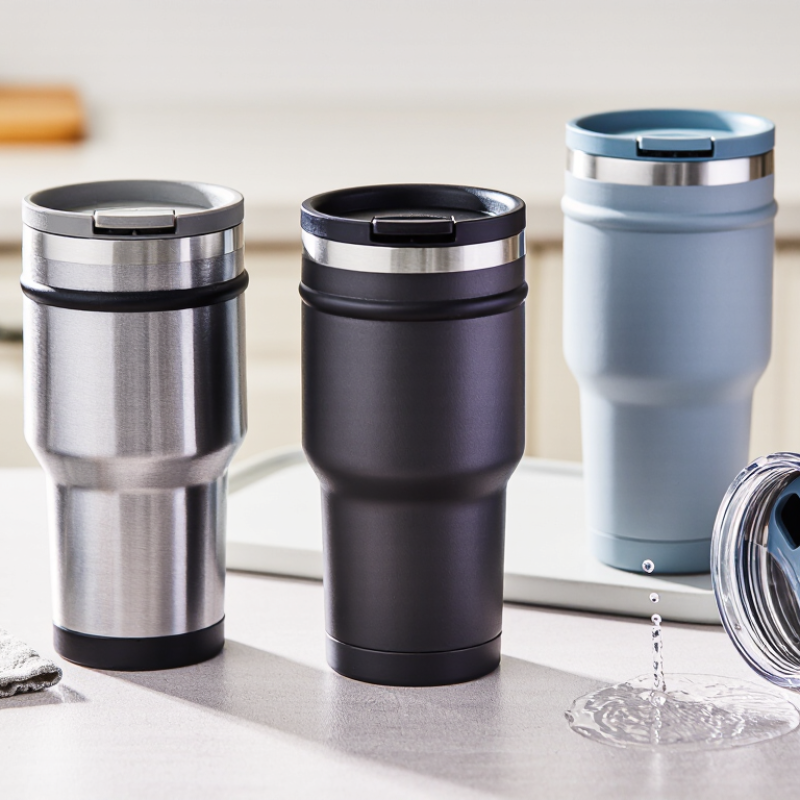
10 Tumbler Mug Buying Tips for Global Buyers

Define Capacity and Use: Compare 12–40 oz Tumbler Sizes

Capacity should match the buyer’s routine, not merely the largest available size. A 12-ounce tumbler suits espresso drinks, short commutes, and smaller hands. A 16–20-ounce model works well for coffee, tea, or desk use. The 24–32-ounce range supports longer commutes and moderate hydration. A 40-ounce tumbler reduces refills, but it can become heavy when filled. Bigger is not always better.

The National Academies’ Dietary Reference Intakes report recommends about 2.7 liters of total daily water for women and 3.7 liters for men, including water from food. A 32-ounce tumbler therefore covers roughly one-quarter to one-third of that intake. Actual needs change with climate, exercise, diet, and health conditions. Grand View Research’s 2024 reusable water bottle market analysis identifies convenience and repeated daily use as important growth factors, supporting practical capacity choices rather than novelty sizing. The International Bottled Water Association’s 2024 sustainability data also shows continued consumer attention toward reusable formats. Test the lid. A larger cup needs a stable grip, leak resistance, and enough space for a vehicle holder. In my own product evaluations, 24 ounces often feels like the most balanced option, though that judgment can miss users who refill less often. Global buyers should also check ounce-to-milliliter labeling, because 32 US fluid ounces equal approximately 946 milliliters, not one exact liter.

Verify Materials: Choose 18/8 Stainless Steel and BPA-Free Components

When evaluating a tumbler mug for international buyers, material verification should come before color or packaging. Look for 18/8 stainless steel, containing about 18% chromium and 8% nickel. This composition offers strong corrosion resistance and suits repeated beverage use. However, a supplier’s product page is not enough evidence. Request the steel grade, food-contact test reports, and batch or traceability details. Check whether the documents match the actual model, not only a similar sample.

The lid deserves equal attention. BPA-free claims should cover every plastic component, including the stopper, straw, gasket, and sliding cover. Ask for laboratory reports that identify the tested materials and test methods. Requirements can differ between destination markets. A report without a clear laboratory name or testing date needs careful review. Small details matter.

Tips: Inspect the rim for rough edges. Smell the silicone seal after opening the carton. Check for a metallic taste with plain water. Test the lid upside down for several minutes. I once focused too much on the steel body and overlooked a weak gasket. That mistake caused leakage during shipping tests. Material safety is important, but real-use performance must be checked as well. Even a reliable certificate cannot replace a physical sample and repeated handling.

Test Insulation: Require Vacuum Performance of 6–12 Hours

For global buyers, insulation should be tested, not accepted from a product sheet. A 6–12-hour vacuum claim needs a controlled comparison. Fill the mug with water at 95°C, record the starting temperature, and measure it after six and twelve hours. Use the same lid position, room temperature, and test volume. Small differences matter.

Grand View Research estimated the global reusable water bottle market at about USD 8.9 billion in 2023, with continued growth through 2030. This expansion increases pressure on suppliers to prove performance clearly. A tumbler that feels warm outside may be losing heat through its walls. Check the exterior after two hours. It should remain close to room temperature, without condensation or unusual hot spots. Also test cold water with ice, because vacuum performance can vary between hot and cold use.

Request at least three samples from separate production batches. One strong sample proves little. Record water temperatures with a calibrated thermometer, and keep the test log with batch numbers and timestamps. A six-hour result may satisfy daily commuting, while twelve hours suits long travel or outdoor work. Still, advertised duration is not universal. Lid sealing, opening frequency, fill level, and ambient temperature can change the outcome. I would not approve a purchase from one convenient test. It is faster, but not reliable enough.

Vacuum Insulation Verification Window for Tumbler Mugs

This buyer benchmark uses a practical 6–12-hour vacuum-performance range. Test samples with a consistent fill volume, starting temperature, ambient temperature, lid position, and measurement method, then verify performance at the selected holding-time checkpoint.

Audit Design: Check 90–95 mm Bases, Lids, Handles, and Leak Resistance

10 Tumbler Mug Buying Tips for Global Buyers

For global buyers, a tumbler’s drawing can look precise while production details drift. Audit the base diameter at 90–95 mm with digital calipers. Measure several samples, not one. A wider base may not fit common vehicle holders. A narrower base can feel unstable on a café table. Check the contact ring for flatness, burrs, and rocking. Place a filled mug on a level surface for thirty minutes. Record movement and water marks. Small differences matter.

Inspect the lid while it is open, closed, and under mild pressure. The gasket should sit evenly in its groove. Threads or snap points must engage without excessive force. Test the drinking opening with the mug tilted over a tray. Do not rely only on a factory claim. Repeat the leak test after washing and cooling the vessel. Thermal changes can expose weak seals. I have seen a lid pass a quick shake test, then seep around the rim overnight. That result changed the inspection checklist.

Handles deserve the same attention. Pull them gently from several angles, then inspect attachment points for flexing or cracks. Check grip clearance with an adult hand. Gloves may reveal sharp edges missed by bare fingers. Measure packed samples too. Handles can distort cartons and raise shipping costs. Keep dated photos, measurements, and test conditions in the audit file. No inspection is perfect. A second review often catches what the first reviewer overlooks. Ask suppliers to explain variations instead of hiding them.

10 Tumbler Mug Buying Tips for Global Buyers - Audit Design: Check 90–95 mm Bases, Lids, Handles, and Leak Resistance

No. Audit Dimension Recommended Buying Specification How to Check Acceptance Criteria Why It Matters
1 Base Diameter and Stability Specify a 90–95 mm base for common vehicle cup holders, subject to an actual fit check. Keep the base flat and concentric with the body. Measure the outermost base diameter with a calibrated digital caliper. Test the filled tumbler in the intended cup-holder samples. Measured diameter is within the agreed tolerance, such as ±1 mm; the tumbler sits fully and remains stable during handling. A base that is too wide may not fit vehicle holders; a narrow or uneven base can tip easily.
2 Overall Size and Capacity Define nominal capacity, such as tumbler sizes of approximately 350–900 mL, together with maximum height and diameter for the target market. Fill to the manufacturer’s stated capacity using water, then measure volume, height, and widest diameter. Net capacity meets the purchase order tolerance, commonly ±5%, without overflowing below the lid interface. Capacity and package dimensions affect shipping cost, user expectations, and compatibility with bags and holders.
3 Lid Fit and Retention Use a lid with a continuous sealing interface, secure attachment, and no visible gaps around the drinking opening or edge. Install and remove the lid repeatedly, inspect the fit, and apply gentle vertical and lateral pull by hand. The lid remains fully seated, does not detach during normal handling, and shows no cracked tabs, distortion, or sharp edges. Poor retention can cause spills, customer complaints, and unsafe exposure to hot beverages.
4 Leak Resistance Set a documented test for the assembled product; a practical buyer requirement is no visible leakage when inverted and gently shaken. Fill with water, close all openings, invert for 60 seconds, then shake gently for 30 seconds over dry absorbent paper. No drops or wet marks from the lid edge, slider, straw port, thread, or gasket area. Record the test temperature and fill level. Leak performance depends on the lid design and test conditions; it should never be assumed from appearance alone.
5 Handle Clearance and Strength Allow comfortable finger clearance, typically at least 25 mm at the narrowest usable opening, while keeping the handle firmly attached. Measure the opening with a caliper and inspect attachment points. Apply a controlled load agreed in the quality plan, such as 5 kg for 10 seconds. No cracking, permanent deformation, loosening, or sharp edges after the load test and repeated normal use. A usable handle improves grip, especially for larger tumblers and hot drinks.
6 Insulation and Temperature Retention For double-wall vacuum models, define a time-and-temperature target rather than using a vague “thermal” claim; for example, measure hot and cold retention at 2, 6, and 12 hours. Use a calibrated thermometer, fixed water volume, controlled starting temperature, and identical room conditions for all samples. Results meet the agreed specification across samples; reject units with abnormal hot spots, vacuum loss, or exterior condensation beyond the agreed limit. Actual performance varies with capacity, lid design, fill level, and ambient temperature.
7 Material and Food-Contact Safety Request material declarations for every food-contact part. Stainless-steel bodies are commonly specified as 18/8 or 18/10 grades; plastic and silicone parts require separate declarations. Review supplier declarations and applicable food-contact test reports for the destination market; visually inspect for corrosion, odor, and contamination. Materials match approved documents, surfaces are smooth and clean, and no unapproved coating or recycled-content claim is used. Food-contact compliance is market-specific and should be verified against the importing country’s requirements.
8 Gasket, Thread, and Seal Durability Use a removable, correctly seated gasket with no flash, tears, or odor. Specify a repeat-use check of at least 100 open-and-close cycles for the lid system. Inspect the gasket before and after cycling, then repeat the inversion leak test with the same water volume. No visible damage, loss of elasticity, cross-threading, lid deformation, or leakage after cycling. Seals often determine real-world leak performance more than the tumbler body itself.
9 Cleaning and Dishwasher Suitability Prefer wide openings, removable seals, and accessible drinking channels. Only specify dishwasher suitability when it has been tested for the complete assembled product or clearly defined parts. Disassemble, wash, and inspect all parts for trapped liquid, staining, odor, warping, coating damage, or loss of seal performance. All user-accessible areas can be cleaned with the stated care method; parts reassemble correctly after cleaning. Difficult-to-clean channels and seals can create hygiene issues and shorten product life.
10 Surface Finish, Marking, and Final Inspection Specify uniform color or coating, legible capacity and care markings, smooth rims, and consistent appearance across the production lot. Inspect under bright, even light and compare samples with the approved reference. Check rim smoothness and marking adhesion after cleaning. No dents, pinholes, exposed metal, peeling print, sharp edges, significant color variation, or workmanship defects visible at normal viewing distance. Consistent finish supports retail presentation and reduces avoidable returns.

Note: Dimensions and test values are practical purchasing benchmarks, not universal requirements. Final tolerances, safety testing, labeling, and claims should be confirmed for the destination market and the specific tumbler design.

Control Global Sourcing: Review FDA, EU 1935/2004, AQL 2.5, and ASTM D4169

When sourcing tumbler mugs globally, I begin with material compliance, not appearance. Ask suppliers for food-contact declarations and test reports covering the steel, coating, silicone, and plastic parts. FDA requirements depend on the intended food-contact materials and conditions. EU Regulation 1935/2004 requires materials to avoid transferring harmful substances, odors, or tastes. Documents should identify the tested material, method, date, and laboratory. A certificate with no traceable sample details deserves questions.

AQL 2.5 is a sampling threshold, not a complete quality guarantee. Before production, define critical, major, and minor defects in writing. Inspect lid fit, leakage, coating damage, sharp edges, odor, and dimensions. A practical inspection may include filled mugs turned upside down for several minutes. It should also check cartons and labels. Sampling can miss defects. That limitation needs honest discussion.

ASTM D4169 helps evaluate packaging under simulated distribution hazards, including vibration, drops, and compression. Select a distribution cycle that matches the real shipping route and assurance level. Request the test configuration, package dimensions, product weight, and pass criteria. I have seen attractive cartons fail after repeated handling because the lid was not protected. We sometimes focus too heavily on laboratory paperwork. A better review connects test evidence with factory inspection and actual transport conditions. One detail is easy to miss: changing carton size can change the test result.

Article Source: