Auto Repair Shop In Plainfield, IL
China remains a central manufacturing base for the global Electric Bicycle Scooter market. Its supplier network covers city e-bikes, folding scooters, cargo models, and delivery vehicles. The International Energy Agency’s Global EV Outlook 2024 estimates that more than 280 million electric two- and three-wheelers were operating worldwide in 2023. China represented the largest share of this fleet and market activity.
Scale is only one reason buyers consider Chinese suppliers. The China Bicycle Association reports continued growth in electric bicycle production, exports, and smart manufacturing investment. However, supplier quality differs sharply. A polished factory showroom does not prove reliable performance. Buyers should examine battery chemistry, motor efficiency, controller protection, waterproofing, warranty response, and spare-parts availability. A supplier’s export history also matters. So does its ability to provide accurate test documents.
This guide examines China’s leading Electric Bicycle Scooter suppliers through practical sourcing criteria. These include production capacity, product customization, international certifications, quality-control systems, and after-sales support. Standards vary across destination markets, and product classifications can create confusing comparisons. Reported market figures also differ by source. That deserves caution.
A dependable supplier should explain its testing process clearly. It should show battery samples, packaging details, and real production footage. Buyers may also request factory audits before placing large orders. Low prices can look attractive beside the quotation table. They may later become expensive through returns, delays, or weak batteries. The following overview aims to identify credible manufacturers while recognizing one uncomfortable fact: no supplier is perfect for every market.
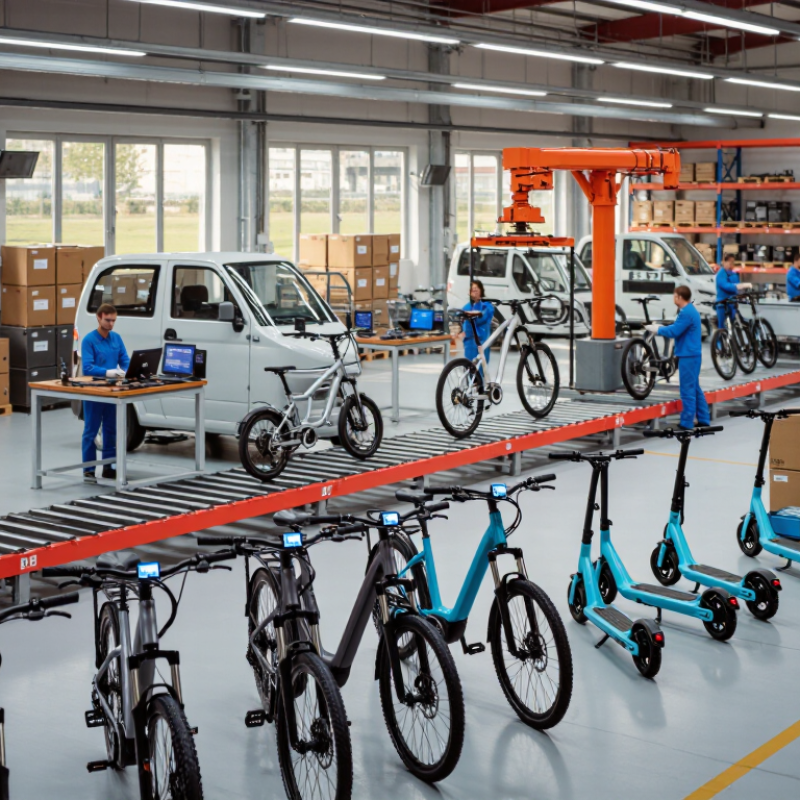
China’s electric bicycle and scooter supplier industry is built around dense manufacturing networks, not a single production center. Major clusters connect frame welding, motor assembly, controller programming, battery packaging, and export logistics. This proximity can shorten sampling cycles and make component changes easier to test. It also creates pressure. Some suppliers compete mainly on price, while stronger factories document materials, test procedures, and corrective actions. A serious sourcing review should examine cell traceability, charger matching, waterproofing, brake response, and software limits. Ask for recent inspection records, production photos, sample results, and clear warranty terms. Documents matter.
Experienced buyers usually compare the actual factory with the trading contact. An audit should check incoming inspection, weld consistency, torque records, battery aging tests, and packing protection. A scooter may look polished in a sample room yet show loose connectors after repeated vibration. That detail deserves attention. Suppliers serving overseas markets must also adapt labels, manuals, plugs, shipping documents, and local compliance requirements. Requirements differ by destination, so copied certificates can create avoidable delays. Even careful buyers sometimes focus too heavily on unit price. That is a mistake. Weak after-sales support, inconsistent spare parts, or unclear production changes can cost more later. Factory communication can also be imperfect, especially when technical terms cross languages. Written specifications and signed sample approvals reduce that uncertainty.
China’s electric mobility factories produce several practical vehicle types. City electric bicycles use upright frames, moderate motors, and enclosed chains. They suit daily commuting, shopping, and short urban trips. Folding bicycles are smaller and easier to store. However, compact hinges need careful inspection. A loose hinge can affect riding confidence.
Mountain-style electric bicycles usually feature suspension forks, wider tires, and stronger frames. Their geometry supports uneven roads, but motor power alone does not ensure control. Cargo bicycles use extended rear racks, long frames, or front boxes. They help deliver groceries and small commercial loads. Fat-tire models provide extra grip on sand, gravel, and wet paths. They can also feel heavy when pedaling without assistance. The categories overlap.
Electric scooters made in China include lightweight commuter scooters, long-range models, and seated versions. Commuter models often use solid or air-filled tires, electronic displays, and folding stems. Long-range designs require larger battery packs and stronger thermal management. Seated scooters offer easier balance for some riders. They still need reliable brakes and stable steering.
In supplier evaluations, I examine weld consistency, battery enclosure quality, charger documentation, and controller heat after repeated use. I also check whether claimed range reflects rider weight, terrain, and temperature. Catalog figures can look attractive. Real conditions are less generous. A dependable supplier should provide clear test records, traceable components, and responsive technical support. Local equipment rules may differ, so buyers must verify requirements before importing or selling.
Major Types of Electric Bicycles and Scooters Made in China
This chart compares common electric bicycle and scooter categories manufactured in China by their typical nominal motor power and advertised riding range. The figures are representative market benchmarks based on commonly published product specifications; actual performance varies according to battery capacity, rider weight, terrain, speed, and local regulations.
China’s electric bicycle and scooter supply chain is concentrated in several practical manufacturing regions. Zhejiang, especially Jinhua and Yongkang, is known for frames, hubs, motors, and compact scooters. Jiangsu, including Wuxi, offers mature bicycle production and organized component networks. Tianjin remains important for high-volume electric bicycle assembly, with nearby parts workshops. Guangdong adds strengths in electronics, battery management systems, tooling, and export-oriented production.
Each cluster has a different sourcing character. Zhejiang factories often support flexible designs and smaller trial orders. Jiangsu suppliers may provide stronger bicycle engineering and stable assembly processes. Tianjin is useful for standardized models and efficient volume production. Guangdong can help when a project needs electronic integration or customized control systems. These are tendencies, not guarantees. Not every supplier fits.
Reliable buyers should verify more than catalog photos. A useful audit checks welding consistency, motor documentation, battery traceability, charger testing, water resistance, and final inspection records. Ask for recent production samples, not only showroom units. Independent testing can reduce avoidable surprises. In practice, the cheapest quotation is rarely the clearest one. Some suppliers communicate well but outsource critical components without explaining it. That weakness deserves attention. A written specification, sample approval, and staged quality checks create a more dependable supply relationship.
Choosing a Chinese electric bicycle or scooter supplier requires more than comparing quotations. IEA’s Global EV Outlook 2024 reports that electric two- and three-wheelers represented about 60% of global sales in 2023. This rapid growth creates strong opportunities, but quality differences remain serious. Request factory photos, production records, and recent independent test reports. Check whether the supplier controls battery assembly, motor testing, and final inspection internally.
Tips: Ask for samples from normal production, not specially prepared units. Verify battery documents against IEC 62133-2 and transport requirements under UN 38.3. For pedal-assisted bicycles, confirm applicable EN 15194 requirements before importing. Also review warranty terms, spare-part availability, and response times. A low price can become expensive when one missing controller delays an entire shipment.
Experienced buyers should audit traceability. Each battery should carry a clear batch code, cell information, and inspection record. The supplier should explain how it manages overheating, water exposure, and charger compatibility. Request video evidence of brake, range, and loading tests, but do not treat videos as proof. An on-site audit or independent inspection is stronger. ISO 9001 certification can indicate process discipline, yet it does not guarantee every vehicle performs well. A polished catalog may hide weak after-sales support. I have seen specifications change between samples and bulk orders, so written approval matters. Supplier evaluation is never perfect; it needs repeated checks.
Choosing a top electric bicycle scooter supplier requires more than comparing factory prices. Export experience, documentation, and destination-market knowledge matter just as much. Request business registration details, factory photos, production records, and recent test reports. A reliable supplier should explain battery chemistry, motor ratings, charger specifications, and warranty terms clearly.
Certification requirements differ by country. Many European markets may require CE-related compliance, while other regions use different electrical, safety, or radio standards. Confirm whether testing covers the complete vehicle, battery, charger, and accessories. Ask for declarations, laboratory reports, user manuals, and traceable serial numbers. Importers should also verify customs codes, labeling rules, insurance, and battery transport documents before shipment. Small errors can delay a container.
Tips: Start with one sample. Test braking, folding joints, lighting, charging time, and range in realistic conditions. Check performance on wet pavement and uneven roads. Do not trust a certificate copied from another model. Ask the supplier to match every report with the exact product version. A pre-shipment inspection is wise, though it cannot replace local testing.
Some suppliers look excellent on paper. Factory visits or independent audits can reveal inconsistent assembly, weak packaging, or unclear quality controls. Product range is not enough. The best choice depends on local regulations, after-sales capacity, spare-part availability, and honest communication. Buyers should also review changing import policies, because yesterday’s accepted document may not satisfy today’s customs officer. Mistakes happen. Good suppliers document them and correct them quickly.
Plainfield, 60585, 60544, 60586, Naperville, 60564, Bolingbrook, 60490, 60440, Romeoville, 60446, Will, Kendall, DuPage, Counties. Our auto repair shop in Plainfield, IL, has been serving the local area plus all surrounding Chicagoland since 1978.
• Computer Diagnostic • Brake Shop • Engine Replacement • Transmission Rebuild • Clutch Replacement • Differential Rebuild • Suspension Shop • Steering • Shocks & Struts • Heating & Cooling • Electrical • Exhaust Shop • Catalytic Converter Replacement • Alignment • Domestic & Foreign Vehicle Service • Auto Repair In Plainfield, IL • Auto Repair Shops Near Me • Towing Service Near Me