ClickCease

China Top Auto Transmission Repair Suppliers?

China has become a significant source of transmission parts, diagnostic equipment, rebuilt units, and workshop solutions. Yet choosing among China’s top auto transmission repair suppliers requires more than comparing prices. A reliable supplier should provide documented testing, accurate specifications, traceable components, and responsive technical support. Product photos are not enough.

Wayne Colonna, a recognized transmission industry educator and former ATRA president, has said, “Diagnosis is the key to a successful transmission repair.” That principle remains important when evaluating Chinese suppliers. A quality partner should support diagnosis before recommending replacement parts. It should understand solenoid testing, valve-body calibration, clutch-pack wear, fluid contamination, and electronic control faults. Small details matter.

Look for ISO-certified production, clear warranty terms, stable inventory, and practical installation guidance. Ask whether each rebuilt transmission receives pressure testing and road simulation. Ask about failure analysis, too. Vague answers deserve caution. Fast replies help, but technical accuracy matters more.

Some suppliers offer excellent value. Others may overstate compatibility. That is where buyers must slow down. A low quotation can hide inconsistent materials, weak packaging, or limited after-sales support. No supplier is perfect. Even a careful review can miss a batch problem.

This guide examines China’s leading auto transmission repair suppliers through experience, technical capability, credibility, and service reliability. It considers repair shops, distributors, and fleet operators. The goal is not to promote one factory blindly. It is to identify suppliers that can earn trust through evidence, consistency, and accountable support.
China Top Auto Transmission Repair Suppliers?

China’s 2024 Auto Base: 358M Cars and 31.44M Sales (MPS/CAAM)

China Top Auto Transmission Repair Suppliers?

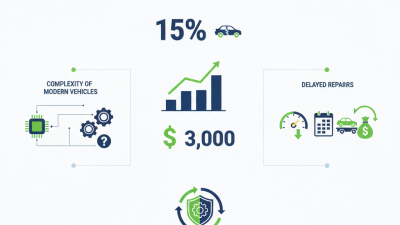
China’s 2024 vehicle base reached 358 million cars, according to the Ministry of Public Security. The China Association of Automobile Manufacturers reported 31.44 million vehicle sales that year. These figures show a massive repair market. They also reveal a difficult sourcing problem.

A large vehicle population creates steady demand for transmission pumps, valve bodies, clutch parts, seals, and remanufactured assemblies. However, production volume alone does not prove technical ability. Experienced buyers should inspect machining accuracy, material reports, pressure-test records, and failure-analysis procedures. A reliable supplier should explain its inspection process clearly. It should also provide traceable batch data and practical warranty terms.

I have seen low prices hide inconsistent tolerances. That mistake becomes expensive after installation. Suppliers serving China’s repair sector need more than catalogs and polished factory photos. They need technicians who understand heat damage, hydraulic contamination, electronic control faults, and repeated road testing. Ask for sample reports before placing a large order. Request clear packaging details, storage guidance, and replacement procedures.

The market remains highly competitive. Some suppliers are strong in remanufacturing, while others focus on precision components. A careful evaluation should compare defect rates, response time, engineering support, and long-term availability. The 358 million-car base suggests opportunity, but it does not remove uncertainty. Real workshop feedback still matters. Data can guide the decision. It cannot replace inspection.
Define the Field: OEM, Remanufacturers, and Transmission Repair Specialists

China Top Auto Transmission Repair Suppliers?

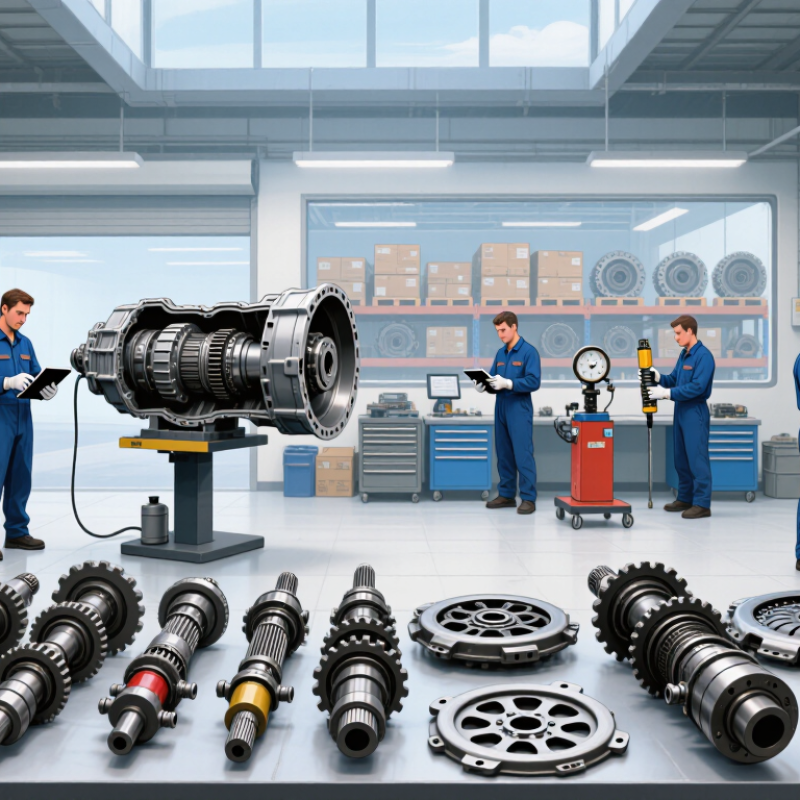
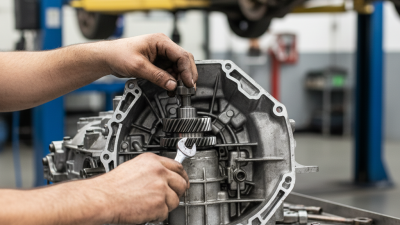
The field includes three different supplier types. OEM suppliers manufacture original transmissions or approved replacement components. Their strengths are dimensional accuracy, documented specifications, and consistent production control. Remanufacturers rebuild used transmissions, replacing worn clutches, seals, bearings, and valve-body parts. They should provide inspection records, tested tolerances, and a clear warranty. Repair specialists work closer to the vehicle. They diagnose fault codes, inspect fluid condition, test line pressure, and rebuild units for specific driving problems.

A reliable supplier should explain its process without hiding behind technical language. Ask whether technicians measure clutch clearance, converter slip, and end play. Request photos of cleaning stations, test benches, and serial-number tracking. A specialist may solve a difficult regional failure better than a large manufacturer. However, a remanufacturer may offer stronger repeatability for common models. These categories can overlap. No label guarantees quality. I sometimes give too much weight to a polished catalog, which is a mistake. Workshop evidence matters more.

Tips: Compare test reports, warranty terms, core-return rules, and response times. Confirm compatibility using transmission codes, vehicle year, engine size, and control-unit details. Ask how the supplier handles early failure claims. A vague answer is a warning. Check packaging, corrosion protection, and connector condition before installation. Careful records can prevent an expensive argument later.

Rank Suppliers by IATF 16949, ISO 9001, Testing, and Production Capacity

China’s top auto transmission repair suppliers should be ranked by verified capability, not advertising claims.

IATF 16949 indicates disciplined automotive quality management, while ISO 9001 supports consistent process control. However, certificates alone do not prove reliable repair results. Check certificate scope, expiry dates, audit history, and covered production sites.

A practical ranking places suppliers with valid IATF 16949 certification at the highest level, provided they also show stable production capacity. Review monthly output, skilled technician numbers, machining equipment, and spare-part traceability.

Strong candidates should provide test records for hydraulic pressure, clutch engagement, gear shifting, noise, and leakage. Testing matters most under realistic temperature and load conditions. Ask for sample reports.

Look beyond polished factory tours. Request failure-rate data, warranty handling procedures, and corrective-action records. Suppliers with ISO 9001 but limited transmission testing may fit smaller repair programs, not demanding vehicle fleets.

Capacity can also mislead; a large workshop may suffer from inconsistent inspection practices. That is a concern. I would score documentation, repeatability, and technical response time separately. Site audits remain valuable because photographs cannot reveal calibration gaps, rushed assembly, or poorly labeled components. A reliable ranking should be updated after trial orders, since actual field performance may challenge an impressive first assessment.

Compare AT, CVT, DCT, and EV Gearbox Expertise Using Failure-Rate Data

China’s top auto transmission repair suppliers should be judged by verified failure data, not workshop claims. Public datasets rarely separate AT, CVT, DCT, and EV gearbox failures. That limitation matters. The Consumer Reports 2024 Annual Auto Survey found electric vehicles had 42% more reported problems than gasoline vehicles, while plug-in hybrids had 70% more. These figures cover the whole vehicle, not only the gearbox, but they signal growing diagnostic complexity.

Traditional AT units often show hydraulic leaks, valve-body wear, and shift-solenoid faults. CVTs need accurate belt, pulley, and fluid diagnosis; incorrect fluid can accelerate slip. DCT failures commonly involve clutch overheating, actuator errors, and low-speed shudder. EV gearboxes usually contain fewer mechanical parts, yet bearing noise, reducer backlash, and inverter-control faults can stop the vehicle. J.D. Power’s 2024 U.S. Vehicle Dependability Study reported powertrain-related problems among major dependability concerns, but it did not publish a universal failure rate for each transmission type.

A capable Chinese supplier should provide teardown photographs, warranty-return percentages, mileage distributions, and repeat-repair rates. Ask for data separated by AT, CVT, DCT, and EV reducer. NHTSA complaint totals are useful signals, not failure rates. I would also verify cold-start tests, fluid-temperature records, and post-repair road tests. Some workshops still replace complete units too quickly. That is expensive, and sometimes wrong. Independent validation remains essential.

China Top Auto Transmission Repair Suppliers? – Compare AT, CVT, DCT, and EV Gearbox Expertise Using Failure-Rate Data
Transmission Type Typical Architecture Common Field Failure Modes Failure-Rate Data Availability Most Useful Reliability KPI Required Repair Expertise Supplier Qualification Evidence
AT
(Automatic Transmission)
Torque converter, planetary gearsets, hydraulic valve body, multi-plate clutch packs, electronic solenoids and transmission control software. Clutch-pack wear, valve-body sticking, solenoid malfunction, torque-converter shudder, fluid contamination, bearing wear and external fluid leakage. Medium
Public data is usually based on warranty claims, technical service records or complaints. A single industry-wide failure percentage is not available because vehicle age, mileage, maintenance and duty cycle differ substantially.
Warranty repairs per 1,000 vehicles or vehicle-years, repeat-repair rate, post-repair leak rate and torque-converter or clutch-pack comeback rate. Hydraulic-pressure testing, valve-body inspection, clutch-clearance measurement, torque-converter diagnosis, electronic control-unit scanning and contamination analysis. Demonstrated pressure-test reports, clutch-clearance records, calibrated dynamometer results, documented parts traceability and a defined warranty-return analysis process.
CVT
(Continuously Variable Transmission)
Variable-diameter pulleys, high-strength steel belt or chain, hydraulic control system, pump, ratio-control valve body and electronic control unit. Belt or chain wear, pulley-surface scoring, hydraulic-pressure loss, pump wear, stepper or ratio-control faults, overheating and start-off judder. Low to Medium
Public failure-rate comparisons are particularly sensitive to model calibration, fluid specification, driving conditions and service history. Unsupported “industry failure percentages” should not be used without a stated denominator and mileage window.
Repairs per 1,000 vehicles, belt or chain replacement rate, ratio-control fault rate, over-temperature events, and average mileage at first failure. CVT-specific pressure testing, pulley and belt-surface inspection, correct fluid identification, ratio-control calibration, thermal diagnosis and vibration analysis. Verified CVT fluid controls, pulley/belt measurement records, thermal-cycle test results, software-calibration capability and evidence of low repeat-repair rates.
DCT
(Dual-Clutch Transmission)
Two independently controlled clutches, concentric or parallel input shafts, synchronizers, electro-hydraulic or electromechanical mechatronics and software-based shift control. Clutch-plate wear, launch judder, mechatronic actuator failure, hydraulic leakage, synchronizer damage, shift-quality deterioration and clutch overheating. Medium
Warranty and repair data can be useful, but results vary considerably between wet-clutch and dry-clutch designs, traffic conditions, software versions and thermal loads.
Clutch replacement rate, launch-judder incidents per 1,000 vehicles, mechatronic warranty-claim rate, adaptation-failure rate and repeat-repair percentage. Clutch-adaptation reset, actuator and solenoid testing, hydraulic-pressure measurement, end-of-line shift testing, software calibration and thermal-performance verification. Mechatronic bench-test capability, clutch-adaptation records, shift-cycle test data, software-version control and documented separation of wet- and dry-clutch repair processes.
EV Single-Speed Gearbox Reduction gearset, input and output bearings, differential, lubrication system, seals, parking mechanism and integrated electric-drive interfaces. Gear whine, bearing spalling, gear-tooth pitting, seal leakage, differential noise, lubrication degradation and parking-lock mechanism faults. Low
Large, harmonized public failure-rate datasets are still limited compared with conventional transmissions. Available records often combine the motor, inverter, gearbox and software into one electric-drive claim.
Gearbox repairs per 1,000 vehicles, noise-related claim rate, bearing replacement rate, lubricant-leak rate and mean mileage or operating hours to first failure. NVH measurement, gear-contact-pattern inspection, bearing-preload measurement, oil-particle analysis, seal testing and high-voltage safety procedures when the gearbox is integrated with the drive unit. NVH test-cell data, gear-mesh inspection records, bearing-preload controls, lubricant cleanliness testing, high-voltage work authorization and sealed-unit leak-test results.
EV Multi-Speed Gearbox Two or more reduction ratios using gearsets, clutches or dog clutches, actuators, lubrication circuits, electronic controls and an integrated electric-drive system. Shift-actuator faults, clutch or dog-clutch engagement problems, gear whine, synchronization errors, bearing wear, lubrication issues and control-software faults. Low
Published field-rate data is limited because designs are less mature and claim databases commonly group gearbox failures with the complete electric-drive unit.
Shift-fault rate per 1,000 vehicles, actuator failure rate, gear-change interruption rate, thermal derating events and repeat-repair rate. Actuator calibration, shift-event logging, gear-mesh and bearing inspection, thermal testing, control-software validation and high-voltage isolation procedures. Shift-cycle durability results, actuator calibration reports, thermal derating records, software traceability, high-voltage safety certification and complete unit-level end-of-line testing.
How to compare suppliers fairly: Do not compare a quoted failure percentage unless the supplier provides the installed population, observation period, mileage or operating-hour denominator, failure definition, warranty scope and repair-return exclusions. The most comparable formula is: Failure rate = confirmed transmission failures ÷ exposed vehicles or vehicle-years × 1,000.
Data interpretation note: Public recall, complaint and warranty datasets generally do not provide a universal China-wide failure rate for every transmission type. Supplier claims should therefore be validated against repair orders, serial-number traceability, mileage-at-failure records, repeat-repair data and independent end-of-line test results.

Verify Supplier Value Through Warranty, MTBF, Lead-Time, and Export Records

China Top Auto Transmission Repair Suppliers?

Supplier value is not proven by a polished catalog. It is proven through measurable after-sales evidence. The 2024 U.S. Aftermarket Status Report estimated the American light-duty aftermarket at about US$383 billion in 2023. This scale increases demand for dependable transmission repairs and replacement units.

Ask suppliers for warranty claims per 1,000 units, failure categories, and claim-resolution time. A 12-month warranty means little without those figures.

MTBF data should identify the test population, mileage, load, and failure definition. “Tested in-house” is too vague. Request serialized test records and independent inspection reports when possible.

Lead-time should separate production, quality release, inland transport, and customs clearance. A supplier promising seven days may mean seven days before dispatch. That distinction matters.

Data can disappoint.

Export records add another practical check. The WTO reported China’s 2023 merchandise exports at approximately US$3.4 trillion, but national scale does not prove one supplier’s reliability. Use customs records, shipment history, destination markets, and declared product classifications to verify experience.

Cross-check those records against invoices and packing lists. Also inspect sample units before signing a larger order.

I have seen suppliers meet specifications on samples, then miss packaging details in volume shipments. That weakness should be recorded, not ignored.