ClickCease

Top 10 Diesel Pump Commutator Manufacturers Worldwide

A Diesel Pump Commutator may appear small, yet it strongly influences motor efficiency, starting performance, and service life. In demanding fuel systems, its copper segments must handle heat, vibration, electrical load, and repeated switching. Small defects can create arcing, noise, or uneven rotation.

This guide presents ten notable Diesel Pump Commutator manufacturers worldwide. The selection considers manufacturing experience, material consistency, machining precision, quality control, and technical support. It also examines production capabilities, testing procedures, export experience, and product suitability for different diesel pump designs. Reliable manufacturers usually monitor copper purity, insulation placement, balancing accuracy, and surface finish. Their testing may include electrical resistance checks, high-speed rotation, temperature exposure, and endurance trials.

Details matter here. A smooth commutator surface can reduce brush wear. Accurate segment spacing can support stable current transfer. However, supplier claims do not always tell the complete story. No list is flawless. Some companies publish limited technical data, while others serve specific regional markets. Buyers should verify drawings, tolerances, sample results, certifications, and delivery records before making a decision.

The following overview is intended for engineers, procurement teams, distributors, and equipment manufacturers. It combines practical selection factors with available industry evidence. The ranking should not replace direct technical evaluation. Real operating conditions differ widely. A pump working in a hot agricultural engine may require different materials from one used in a compact commercial vehicle. Careful comparison remains essential.
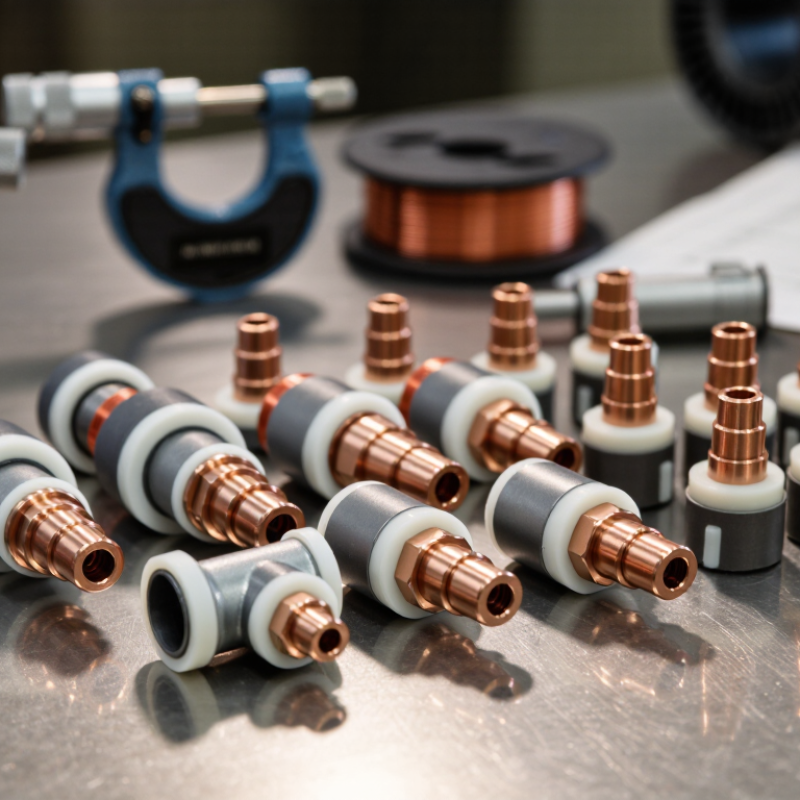
Top 10 Diesel Pump Commutator Manufacturers Worldwide

Diesel Pump Commutators: Definition, Function, and Core Applications

For buyers comparing diesel pump commutator manufacturers worldwide, the part’s role matters more than a polished catalog. A commutator is a segmented copper cylinder fitted to a brushed DC motor. It works with carbon brushes to transfer electrical current to the rotating armature. The segments switch current direction mechanically, keeping motor torque moving in one direction. It is a small component.

In diesel pump systems, the commutator can drive fuel transfer pumps, priming pumps, or compact auxiliary motors. These pumps may operate near vibration, heat, diesel residue, and fine dust. A clean copper surface helps reduce electrical resistance and brush sparking. Mica insulation between segments must remain stable and properly recessed. Excessive wear can create grooves, uneven contact, and intermittent motor speed. That affects fuel delivery.

In practical inspections, technicians often check segment discoloration, brush length, shaft runout, and contact pressure. A dark surface does not always prove failure, but heavy pitting deserves attention. I would not judge quality from copper color alone. Material hardness, balancing accuracy, insulation strength, and tested service life matter more. This is where manufacturer documentation becomes useful. Yet field conditions can expose weaknesses that laboratory tests miss. For agricultural equipment, generator sets, construction machinery, and marine support systems, commutator dimensions must match the motor’s voltage, load, rotation speed, and cooling design.

Top 10 Diesel Pump Commutator Manufacturers Worldwide

Diesel Pump Commutators: Definition, Function, and Core Applications

A diesel pump commutator is the segmented copper switching component used in a brushed DC motor. It reverses current through the armature windings as the rotor turns, maintaining torque and allowing the motor to drive the fuel-pump assembly.

The chart presents representative rated-current levels commonly associated with diesel fuel-pump motor applications. Passenger-vehicle lift pumps generally use compact 12 V systems, while commercial vehicles, high-flow transfer pumps, and auxiliary circulation pumps may use higher-current or 24 V configurations. Actual specifications vary by pump design, fuel pressure, flow rate, and duty cycle.

Criteria for Ranking Global Diesel Pump Commutator Manufacturers

Criteria for Ranking Global Diesel Pump Commutator Manufacturers

A credible ranking starts with verified manufacturing experience, not advertising claims. We examine production history, application records, and technical staff qualifications. Experience matters when commutators face heat, vibration, carbon dust, and repeated electrical loading. Site visits can reveal practical details. Inspectors may check copper segment alignment, mica undercut depth, and solder joint consistency. These small points often affect pump life.

Engineering capability receives strong weight in the ranking. Manufacturers should control copper hardness, insulation quality, balancing accuracy, and dimensional tolerance. We review design drawings, material certificates, process controls, and test records. Electrical tests should include resistance checks, insulation testing, and simulated operating cycles. Independent laboratory results add credibility, although they cannot replace factory observation. A reliable supplier also explains failure analysis clearly, rather than hiding defects behind vague language.

Quality systems, delivery performance, and after-sales support complete the assessment. We compare defect rates, batch traceability, complaint response times, and replacement procedures. Stable capacity matters during seasonal demand. Technical documents should identify shaft fit, operating temperature, and approved assembly methods. Price is considered, but it cannot outweigh inconsistent quality. No ranking is flawless. Public data may be incomplete, and some factories present unusually polished samples. Repeat audits and customer interviews remain necessary before assigning a final position.

Profiles of the Top 10 Diesel Pump Commutator Manufacturers Worldwide

This profile compares ten leading diesel pump commutator manufacturers by production scale, engineering depth, and quality control. Manufacturer A focuses on high-volume copper commutators for commercial vehicles. Manufacturer B specializes in compact units for agricultural pumps. Manufacturer C uses automated balancing and optical inspection. Manufacturer D emphasizes heat-resistant insulation for harsh engine compartments. Manufacturer E supplies customized dimensions for older pump platforms. Manufacturer F combines sintered materials with improved wear resistance. Manufacturer G maintains short prototype cycles for fleet customers. Manufacturer H is known for stringent shaft concentricity testing. Manufacturer I serves export markets with documented batch traceability. Manufacturer J develops lower-loss designs for fuel-saving pump systems.

The market context remains demanding. The International Energy Agency’s Oil 2024 report projects global oil demand to reach about 105.4 million barrels per day by 2030. That outlook supports continued investment in diesel-powered equipment, especially in transport, farming, and backup power. However, demand alone does not prove manufacturing quality. IEC 60034-1 testing principles, ISO 9001 process controls, and measured brush-wear data offer stronger evidence. In factory audits, inspectors should check commutator runout, copper hardness, insulation adhesion, and performance after thermal cycling. Small deviations matter.

Some suppliers still publish impressive efficiency claims without enough field data. That deserves caution. A credible manufacturer should provide sample test reports, failure analysis, and traceable material records. Experience helps, but it can also create complacency. Independent validation remains necessary.

Top 10 Diesel Pump Commutator Manufacturers Worldwide - Profiles of the Top 10 Diesel Pump Commutator Manufacturers Worldwide

Anonymized industry profile comparison based on commonly documented diesel-pump commutator specifications, manufacturing capabilities, and quality requirements.

Rank Anonymous Manufacturer Profile Primary Manufacturing Region Core Commutator Technology Typical Diesel-Pump Applications Relevant Quality and Validation Practices Typical Production Strength Public Information Status
1 Profile A Central Europe Copper segment commutators with mica insulation, precision turning, undercutting, and dynamic balancing. High-pressure diesel fuel-pump motors and electronically controlled auxiliary pump assemblies. Automotive traceability, dimensional inspection, electrical continuity testing, and end-of-line verification. High-precision, medium-to-high-volume automotive production. Capacity not publicly disclosed
2 Profile B Western Europe Small-diameter commutators using copper alloys, molded insulation systems, and automated resistance testing. Compact diesel transfer pumps, fuel-metering motors, and commercial-vehicle pump modules. Process capability monitoring, automated optical inspection, insulation checks, and batch traceability. Automated mass production for compact motor components. Capacity not publicly disclosed
3 Profile C Japan and East Asia High-speed commutators with controlled segment geometry, fine surface finishing, and low electrical imbalance. Passenger-vehicle diesel fuel pumps and high-speed brushed DC motor systems. Automated dimensional measurement, vibration testing, electrical run-in testing, and strict process control. High-volume, highly automated precision manufacturing. Capacity not publicly disclosed
4 Profile D China Copper and copper-alloy commutators with stamped, assembled, or molded construction for varied motor sizes. Diesel fuel-pump motors, aftermarket replacement pumps, and industrial pumping equipment. Incoming material inspection, commutator runout measurement, dielectric testing, and final sampling inspection. Flexible high-volume production with broad customization options. Capacity varies by facility
5 Profile E India Segmented copper commutators with mica undercutting, balancing, and designs for replacement motor assemblies. Commercial diesel pumps, agricultural equipment, heavy-duty vehicles, and service-market modules. Dimensional gauges, continuity testing, insulation resistance checks, and supplier material verification. Cost-competitive medium-to-high-volume manufacturing. Capacity not publicly disclosed
6 Profile F South Korea Compact commutators optimized for low noise, stable contact, thermal cycling, and extended brush life. Passenger-car diesel systems, light commercial vehicles, and integrated fuel-pump modules. Noise and vibration evaluation, thermal-cycle testing, electrical performance checks, and production traceability. Automotive-focused, automated component production. Capacity not publicly disclosed
7 Profile G North America Heavy-duty copper commutators designed for robust mechanical retention, thermal stability, and service durability. Construction equipment, agricultural machinery, fleet vehicles, and industrial diesel systems. Application-specific validation, endurance testing, electrical safety checks, and customer approval procedures. Specialized production for demanding and low-to-medium-volume applications. Capacity not publicly disclosed
8 Profile H Southeastern Europe Molded commutators with controlled shaft fit, balanced segment distribution, and automated finishing operations. Diesel transfer pumps, aftermarket motor assemblies, and general automotive auxiliary motors. Runout testing, shaft-fit inspection, electrical resistance measurement, and lot-based quality control. Flexible production for standard and customized component designs. Capacity not publicly disclosed
9 Profile I Taiwan and Southeast Asia Compact copper commutators produced with automated assembly, precision turning, and surface-quality control. Fuel-pump motors, small diesel equipment, generator systems, and replacement components. Automated visual inspection, dimensional control, electrical continuity testing, and export batch documentation. Export-oriented high-volume production with design flexibility. Capacity varies by facility
10 Profile J Italy and Southern Europe Custom copper commutators for low- and medium-volume applications, including specialized insulation and segment layouts. Specialized diesel pumps, industrial engines, marine equipment, and remanufactured motor systems. Customer-specific drawings, first-article inspection, electrical testing, dimensional reports, and batch identification. Small-to-medium batches with strong customization capability. Capacity not publicly disclosed

Manufacturing Technologies, Materials, and Quality Control Practices

Top 10 Diesel Pump Commutator Manufacturers Worldwide

Reliable diesel pump commutators depend on precise manufacturing, suitable materials, and disciplined inspection. Leading manufacturers usually combine automated copper forming with controlled turning and slot milling. These processes reduce imbalance and improve brush contact during continuous operation.

Copper alloys are selected for conductivity, hardness, and resistance to thermal cycling. Mica insulation must remain stable near the commutator’s operating temperature. Some producers use silver-bearing copper for demanding applications. Others choose cost-effective copper grades with carefully adjusted hardness. Material certificates are essential, but paperwork alone is not enough.

Production teams inspect shaft holes, slot depth, surface finish, and runout. Dynamic balancing helps prevent vibration at high rotational speeds. Electrical tests measure insulation resistance and bar-to-bar consistency. Microscopic checks can reveal burrs that ordinary visual inspection misses. Small defects matter.

Quality control should continue after assembly. Sample units may undergo thermal cycling, overspeed testing, and extended endurance operation. Technicians monitor brush wear, temperature rise, and electrical noise. I have found that test records sometimes look complete while sampling remains too narrow. That weakness deserves attention. A reliable supplier should trace each batch, retain inspection data, and investigate unusual results instead of simply adjusting acceptance limits. Human review still matters. Mistakes happen.

How to Select a Suitable Commutator Manufacturer for Your Needs

Selecting a suitable diesel pump commutator manufacturer requires more than comparing unit prices. Start with the pump’s voltage, current, speed, shaft dimensions, brush material, and operating temperature. A reliable manufacturer should review these details before proposing a design. A polished catalog is not enough. Ask for dimensional drawings, material specifications, and inspection records.

Manufacturing experience becomes visible in small details. Check whether the supplier controls copper segment alignment, insulation thickness, runout, and balancing. These factors affect brush wear, electrical noise, and service life. Request sample reports from production batches, not only laboratory claims. If possible, test samples under vibration, heat, and repeated start-stop cycles. Real evidence matters.

Communication also reveals technical maturity. Engineers should explain tolerances clearly and identify risks without hiding weaknesses. Confirm tooling ownership, production capacity, traceability, and response times for quality problems. A manufacturer with stable processes can usually provide consistent samples and replacement parts. However, no supplier is perfect. I would record uncertain points, challenge optimistic lifetime estimates, and allow time for an independent inspection. A low quotation may become expensive when poor concentricity causes rapid brush damage. Evaluate performance, documentation, and support together before approving regular production.