ClickCease

10 Tips to Choose the Right Iron Square Pipe?

Choosing the right Iron Square Pipe begins with more than comparing prices or polished surface finishes. The decision affects structural safety, fabrication time, corrosion resistance, and long-term maintenance. World Steel Association data shows that global crude steel production exceeded 1.8 billion tonnes in 2023. This scale reflects a mature industry, but product quality still varies between mills, grades, and suppliers.

A square pipe may look simple on a warehouse rack. Its wall thickness, outside dimensions, corner radius, straightness, and coating determine its real performance. ASTM A500 covers cold-formed welded and seamless carbon structural tubing in many markets. EN 10219 addresses cold-formed welded structural hollow sections in Europe. These standards help buyers compare measurable properties instead of relying on appearance alone.

Load requirements should come before aesthetic preferences. A thin wall may reduce weight, yet it can complicate welding, drilling, and connection design. Moisture near cut edges can also create early rust, especially in outdoor frames. Galvanized, painted, and stainless options need different maintenance plans. Some choices appear economical until transport damage, rework, or replacement costs emerge.

This guide presents ten practical tips for evaluating an Iron Square Pipe. It considers grade, dimensions, tolerances, surface protection, testing, documentation, and supplier capability. Mill certificates and traceability deserve attention. They are not decorative paperwork. They support verification.

Still, no checklist replaces an engineer’s calculations or a site-specific inspection. Published data may not reflect every production batch. That limitation matters. Buyers should confirm applicable standards, request current test reports, and examine samples before approving large orders. A careful decision often starts with one simple question: what must this pipe endure?
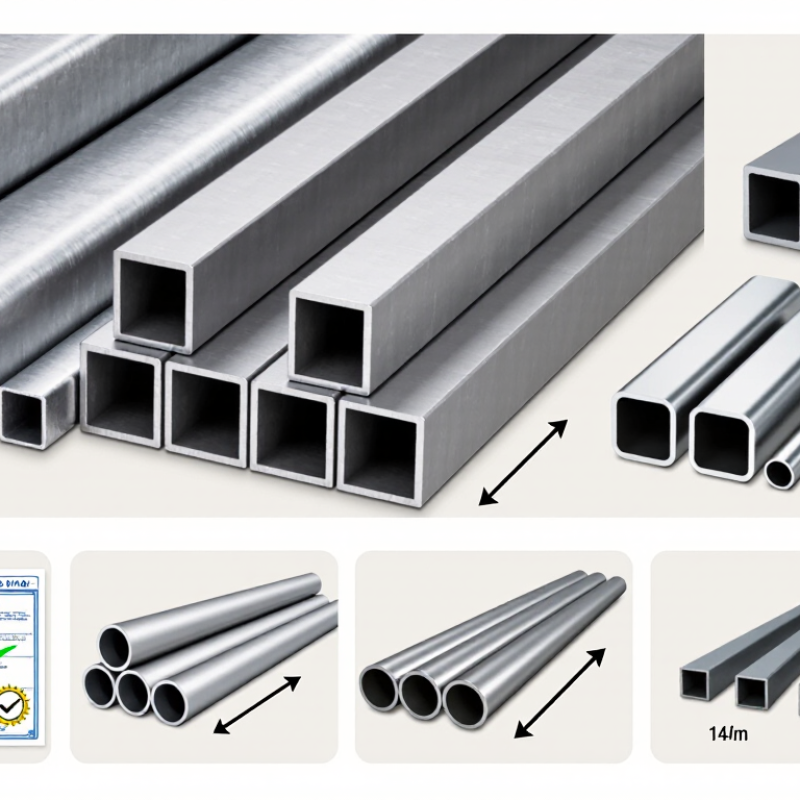
10 Tips to Choose the Right Iron Square Pipe?

Define the Purpose and Required Pipe Performance

Choosing an iron square pipe starts with its job, not its appearance. Will it support a gate, carry a frame, protect wiring, or serve as a visible handrail? Each use creates different demands for load, stiffness, impact resistance, and dimensional accuracy. A light indoor frame may need clean edges and easy welding. An outdoor support may require stronger walls and protection against moisture. Write the purpose in one sentence. Keep it specific.

Measure the expected load, span, connection method, and movement before selecting a size. Do not judge performance by outside dimensions alone. Wall thickness strongly affects bending strength, weld penetration, weight, and cost. Check whether the pipe will face rain, salt air, chemicals, heat, or repeated vibration. Ask for material grade, test documents, dimensional tolerances, and corrosion protection details. Relevant engineering standards can help verify these claims. For critical structures, a qualified engineer should review the calculations. That step is not excessive.

Cutting and drilling can weaken poorly chosen sections. Leave room for joints, fasteners, drainage, and future maintenance. A tight fit may look efficient, but it can complicate welding and inspection. Also consider transport and installation. I sometimes see buyers choose the thickest pipe, assuming it is safest. That choice can add unnecessary weight and create handling problems. The better question is simple: what performance must the pipe deliver, and for how long? Specifications should answer that clearly.

10 Tips to Choose the Right Iron Square Pipe: Define the Purpose and Required Pipe Performance

Select a square pipe by balancing structural performance, weight, and intended use. The chart compares common nominal square hollow sections using theoretical steel mass calculated from the outside size, wall thickness, and a steel density of 7,850 kg/m³.

How to read the chart: Larger and thicker pipes generally provide greater bending resistance but also add weight and material cost. Confirm the required load capacity, span, corrosion protection, connection method, and applicable structural standard before selecting a pipe.

Choose the Appropriate Iron Grade and Material Quality

When selecting an iron square pipe, material quality matters more than a bright surface. Begin with the intended load, exposure, and joining method. Low-carbon structural steel is often practical for frames because it welds easily. However, a stronger grade is not automatically better. Poor weldability can slow fabrication and create brittle areas. Check the specified grade, chemical composition, and mechanical properties on the mill certificate. Do not rely on color alone.

Moisture, salt air, and industrial dust can attack unprotected steel quickly. Choose a suitable coating system or corrosion-resistant material after reviewing the site. Galvanizing may help, but its thickness and surface preparation still need verification. Ask for test reports covering yield strength, tensile strength, and elongation. Small records matter. Compare them with the relevant project standard, such as ASTM or EN requirements.

Dimensions also reveal quality. Check wall thickness at several points, especially near corners. Uneven walls can complicate welding and reduce predictable performance. I once treated a smooth, straight tube as premium material. Later, its documentation was incomplete, and that assumption looked careless. That experience changed my inspection routine. Sample the batch when possible, and confirm heat numbers match the paperwork. A qualified engineer should approve the final grade for safety-critical structures. Looks can mislead.

Match Pipe Dimensions, Wall Thickness, and Weight

Choosing the right iron square pipe starts with accurate dimensions, not appearance. Measure the outside width and height with calipers, especially when the pipe must fit inside a bracket. Then check the internal opening. A small difference can block wiring, drainage, or reinforcement.

Wall thickness controls strength, weight, and cutting difficulty. Do not judge it by sight. Compare several points along the pipe because manufacturing variation can occur. Confirm the stated tolerance with a supplier’s test certificate. For outdoor frames, consider corrosion loss, but avoid adding thickness without checking the design load. More steel is not always better.

Weight provides a useful reality check. Calculate the expected weight per meter from the dimensions and thickness, then compare it with the listed value. A large mismatch deserves questions. I once trusted a neat calculation and overlooked an oversized corner radius. The pipe fitted poorly. Measure the corner radius, length, straightness, and end condition before ordering. Also verify the load, span, connection method, and transport limits. Keep a sample section when possible. It helps reveal coating, wall variation, and hidden defects. Availability may influence the final choice, but it should not replace engineering judgment.

Evaluate Surface Finish, Corrosion Resistance, and Durability

Choosing the right iron square pipe starts with a close inspection of its surface finish. Run a clean glove along each side. The surface should feel even, without deep scratches, flaky scale, sharp burrs, or visible pits. A smooth finish supports painting and reduces areas where moisture can collect. However, a bright appearance proves little. I once accepted a pipe with an attractive surface, then found uneven wall thickness during cutting.

Corrosion resistance depends on the pipe’s environment, not only its appearance. For outdoor frames, coastal areas, and damp workshops, ask about the protective coating, coating thickness, and preparation method. Check whether the surface was cleaned properly before treatment. Rust hidden inside the corners can spread unnoticed. Small drain holes and sealed joints may also improve service life. They are easy to overlook.

Durability requires more than heavy steel. Confirm the wall thickness, straightness, weld quality, and stated mechanical properties. Compare these details with the expected load, impact, and temperature changes. A pipe that feels strong by hand may still deform under repeated stress. Request inspection records when the project is critical. Measure several pieces, because production variation happens. My own mistake was measuring one perfect sample and assuming every length matched. A careful choice allows room for that uncomfortable possibility.

Compare Standards, Suppliers, Prices, and Delivery Conditions

Choosing the right iron square pipe requires more than comparing a few quoted prices. Start by matching the project specification with a recognized standard, such as ASTM A500 or EN 10219. Check grade, outside dimensions, wall thickness, corner radius, and permitted tolerances. A low price means little if the pipe fails fabrication or load requirements. Request a mill test certificate and inspection records before placing a large order.

Supplier evaluation should include manufacturing capacity, quality controls, export experience, and communication speed. Ask whether the quoted material is new, consistently produced, and suitable for welding or galvanizing. Sample measurements can reveal uneven walls or sharp corners. This small check matters. I would also compare at least three suppliers, but I would not choose the cheapest offer automatically. A cheaper quotation may exclude cutting, packaging, inspection, or inland transport.

Compare the complete delivered cost, not only the price per meter. Include minimum order quantity, payment terms, currency changes, insurance, and possible storage charges. Delivery conditions need equal attention. Confirm production time, loading date, port, shipping method, and agreed trade terms in writing. A supplier promising ten-day delivery may simply be estimating. Leave room for delays caused by production changes or port congestion. I have seen buyers focus on price and overlook unsuitable bundles, which created extra handling work. That mistake is easy to repeat. Before approval, ask for photos of bundles, labels, protective wrapping, and the final packing list.

10 Tips to Choose the Right Iron Square Pipe? - Compare Standards, Suppliers, Prices, and Delivery Conditions

No. Selection Tip Key Data to Compare Practical Benchmark Recommended Buying Action
1 Define the required application Structural frame, machinery support, fencing, furniture, or general fabrication Load-bearing applications require a specified structural standard and documented mechanical properties; decorative applications may prioritize surface finish and dimensional appearance. Provide the supplier with the end use, loading conditions, connection method, and corrosion environment before requesting a quotation.
2 Select a recognized standard Standard designation, production method, dimensional tolerances, and test requirements Common references include EN 10219 for cold-formed welded structural hollow sections, ASTM A500/A500M for carbon steel structural tubing, and EN 10305 for precision applications. Do not accept a quotation stating only “iron square pipe.” Request the exact standard, grade, and edition applicable to the project.
3 Match the steel grade to the load Yield strength, tensile strength, elongation, weldability, and impact requirements Typical structural grades may have yield strengths around 235–355 MPa, depending on the applicable standard and grade. Choose the lowest grade that safely satisfies the engineering calculation; higher strength does not automatically compensate for insufficient wall thickness or poor design.
4 Verify outside dimensions and wall thickness Width × height, nominal thickness, corner radius, length, and permissible tolerances Commercial square hollow sections are commonly supplied in 6 m or 12 m lengths, while exact size availability depends on the mill and standard. Specify dimensions in millimetres, required length tolerance, cut-length tolerance, and whether measurements are nominal or minimum values.
5 Check surface and corrosion protection Black mill finish, pickled and oiled, painted, galvanized, or post-fabrication coating Hot-dip galvanized products are often specified by coating mass or thickness; ISO 1461 is commonly used for hot-dip galvanized coatings on fabricated iron and steel articles. For outdoor or humid service, compare the complete corrosion-protection system rather than comparing uncoated and galvanized prices directly.
6 Evaluate supplier quality documentation Mill test certificate, chemical composition, mechanical test results, inspection certificate, and traceability An EN 10204 3.1 inspection certificate is commonly requested when the buyer needs batch-specific material results certified by the manufacturer. Make certificate delivery a purchase-order requirement and ensure heat or batch numbers on the documents match the delivered bundles.
7 Compare prices on the same basis Price per tonne or metre, grade, thickness, coating, quantity, cutting, packing, taxes, and freight Indicative carbon-steel square-pipe prices can vary widely, often approximately USD 700–1,400 per metric tonne before project-specific freight, taxes, coating, and processing charges. Request at least three like-for-like quotations and calculate the landed cost instead of selecting the lowest ex-works price.
8 Review minimum order quantity and packaging Minimum order, bundle weight, protective caps, wrapping, marking, and loading method Steel bundles are commonly secured with straps and may be protected with woven wrapping or waterproof covers for transport. Confirm bundle dimensions and lifting points so the material can be safely unloaded and stored at the destination.
9 Compare production and delivery lead times Stock status, production time, inspection time, port handling, transit time, and customs clearance Standard stock sizes may ship faster, while non-standard dimensions, special grades, galvanizing, and cut-to-length orders commonly require additional production time. Obtain separate dates for order confirmation, production completion, dispatch, estimated arrival, and document submission.
10 Clarify delivery and payment conditions Incoterm, named place, insurance, shipping responsibility, payment schedule, and claims procedure FCA, FOB, CFR, CIF, and DAP allocate freight, risk, insurance, and import responsibilities differently; the named place is essential to interpreting the term. State the applicable Incoterms® rule and named location in the purchase order, then define inspection, shortage, damage, and late-delivery remedies.

Note: Price ranges are indicative planning figures only and can change with steel-market conditions, order quantity, dimensions, grade, coating, freight, currency, taxes, and delivery location. Always obtain a current, like-for-like quotation and verify the applicable standard edition before purchase.