Auto Repair Shop In Plainfield, IL

Choosing the right Extrusion Machine Parts is not a minor purchasing task. It affects output stability, energy use, product quality, and maintenance time.
PlasticsEurope’s Plastics—The Fast Facts 2024 reports global plastics production reached 413.8 million tonnes in 2023. That volume places constant pressure on extrusion lines. Grand View Research also identifies process efficiency, replacement demand, and automation as important drivers in the extrusion machinery market. However, market estimates differ between research firms. That difference deserves attention. Numbers are useful, but machine conditions are more revealing.
Chris Rauwendaal, author of Understanding Extrusion, states, “The screw is the heart of the extruder.” His observation remains practical on a factory floor. A worn screw may produce uneven melt temperature, unstable pressure, or visible surface lines. A damaged barrel can increase leakage and reduce throughput. Even a small heater-band fault can create cold spots around the die.
These ten tips focus on measurable decisions. Check alloy compatibility, dimensional tolerance, wear resistance, cooling design, supplier documentation, and expected service life. Compare the part with your resin, screw speed, pressure, and operating temperature. Do not choose only by price. That looks efficient until an unplanned shutdown costs more than the component.
A better question is simple: what failure are you preventing? Inspect drawings, certificates, warranty terms, and replacement records. Ask for evidence, not impressive language. One overlooked detail can matter. Careful selection is imperfect, but disciplined comparison makes the risk smaller.
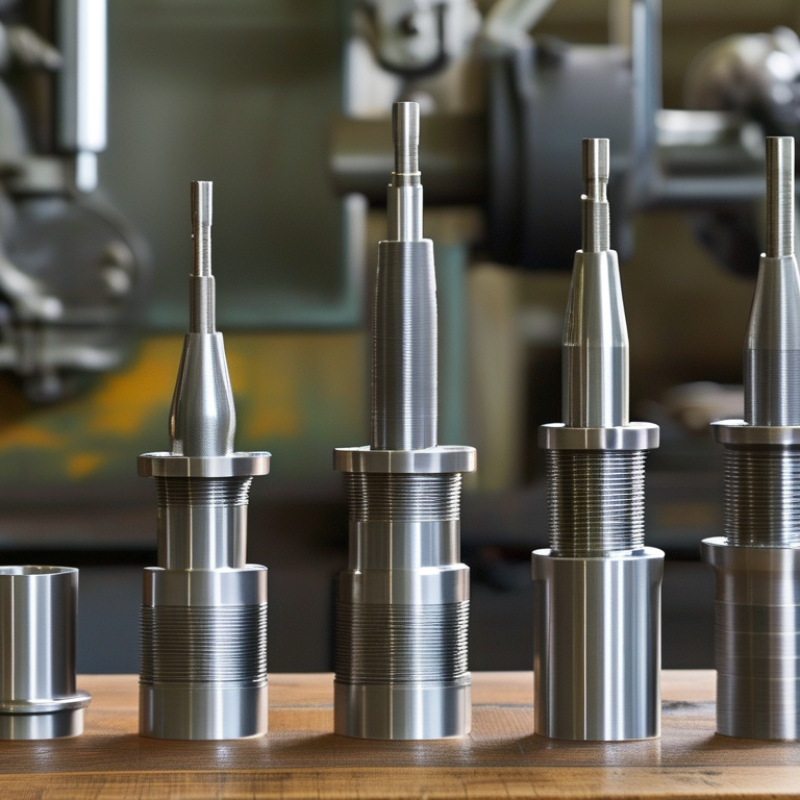
10 Tips for Choosing Extrusion Machine Parts
Each extrusion machine part needs a defined job before replacement or purchase. The screw conveys, melts, mixes, and pressurizes the polymer. Its diameter, length-to-diameter ratio, flight depth, and compression ratio must match the material and output target. The barrel supports heat transfer and pressure stability. Its internal coating must resist wear, corrosion, and thermal cycling. PlasticsEurope’s Plastics – the Fast Facts 2024 reports 413.8 million tonnes of global plastics production in 2023. That scale makes small component failures expensive.
Tip: Specify the polymer, additives, temperature, pressure, and hourly throughput. Do not choose a die from dimensions alone. Its flow channels must support balanced filling and acceptable residence time. Heating zones need enough capacity, while cooling must remove heat without creating distortion. The drive system should provide continuous torque, not only peak power. Sensors should measure melt pressure and temperature close to the process, where readings are meaningful.
Tip: Separate wear requirements from performance requirements. A screen changer may need pressure tolerance, fast maintenance, or fine filtration. A screw may need mixing efficiency rather than maximum output. Review historical maintenance records and actual failure surfaces. This step is often skipped. It should not be. U.S. Department of Energy motor-system guidance identifies motor-driven equipment as a major industrial electricity load, so drive efficiency deserves a lifecycle calculation. A practical specification should include operating limits, inspection intervals, spare-part compatibility, and acceptance tests. Perfect assumptions are rare. Validate them during a controlled production trial.
| No. | Extrusion Machine Part | Primary Role | Key Technical Requirements | Practical Selection Guidance | Common Verification Point |
|---|---|---|---|---|---|
| 1 | Extruder Screw | Conveys, melts, mixes, and pressurizes the polymer before it reaches the die. | Correct diameter, length-to-diameter ratio, compression ratio, flight geometry, surface hardness, and compatibility with the polymer and additives. | Choose a general-purpose design for standard thermoplastics; use barrier or mixing sections when melting uniformity or dispersion is critical. | Check screw wear, flight clearance, output stability, and melt temperature uniformity. |
| 2 | Barrel and Liner | Contains the screw and provides controlled heating, cooling, and material containment. | Suitable internal diameter, wear resistance, corrosion resistance, heating-zone layout, cooling capacity, and accurate alignment. | Use wear-resistant surfaces for glass-filled or mineral-filled compounds and corrosion-resistant materials for aggressive additives. | Inspect internal wear, roundness, leakage, temperature response, and screw-to-barrel clearance. |
| 3 | Drive Motor and Gearbox | Supplies rotational speed and torque to the screw under changing process loads. | Adequate continuous torque, peak-load capacity, speed range, gear ratio, lubrication system, and overload protection. | Size the drive from maximum required torque and throughput rather than average operating load alone. | Confirm rated torque, operating speed, vibration level, lubrication condition, and thermal performance. |
| 4 | Feed Throat and Feeding System | Transfers solid material from the hopper into the screw channel at a controlled and consistent rate. | Appropriate opening geometry, cooling provision, bridging resistance, material flow control, and compatibility with pellets, powder, or regrind. | Select a grooved or cooled feed section when improved solids conveying and reduced feed-throat sticking are required. | Monitor feeding consistency, throat temperature, material bridging, and signs of premature melting. |
| 5 | Heater and Cooling Zones | Controls the barrel temperature profile and maintains stable polymer melting conditions. | Sufficient heating capacity, responsive cooling, independent zone control, accurate sensors, and safe electrical insulation. | Use tighter zone control for heat-sensitive materials and processes requiring narrow melt-temperature limits. | Compare set temperature with actual temperature, check response time, and verify sensor calibration. |
| 6 | Screen Pack and Breaker Plate | Filters contaminants, improves melt homogeneity, and creates back pressure for process stability. | Correct screen area, mesh sequence, pressure rating, open area, material strength, and manageable pressure drop. | Use finer screens for filtration needs, but balance filtration against throughput, contamination level, and allowable pressure. | Track melt pressure, screen loading, output fluctuation, and the frequency of screen changes. |
| 7 | Melt Pressure and Temperature Sensors | Measures critical melt conditions for process control, quality monitoring, and equipment protection. | Suitable pressure range, temperature range, response time, chemical compatibility, installation depth, and calibration accuracy. | Select sensors with ranges above normal operating values while maintaining adequate resolution in the working range. | Verify calibration, signal stability, zero offset, mechanical sealing, and safe removal procedures. |
| 8 | Extrusion Die | Shapes the pressurized melt into the required profile, sheet, film, pipe, tube, or filament. | Correct flow-channel design, die-gap accuracy, suitable steel or coating, thermal uniformity, and adjustment capability. | Match the die design to the product cross-section, material viscosity, output rate, drawdown, and dimensional tolerances. | Inspect die-lip condition, land length, flow balance, melt distribution, and product dimensional stability. |
| 9 | Calibration, Cooling, and Sizing Equipment | Sets final dimensions and removes heat so the extrudate can retain its required shape. | Stable vacuum or sizing pressure, adequate cooling capacity, uniform water flow, accurate guides, and controlled line speed. | Choose capacity according to product size, polymer cooling behavior, line speed, and required dimensional tolerance. | Check cooling-water temperature, vacuum stability, sizing accuracy, line alignment, and surface quality. |
| 10 | Haul-Off, Cutter, or Winder | Controls product speed and tension while pulling, cutting, or winding the finished extrusion. | Appropriate speed range, traction control, synchronized operation, load capacity, tension control, and product-protection features. | Match the unit to the product’s dimensions, surface sensitivity, output rate, required cut length, and winding tension. | Verify speed synchronization, grip pressure, tension uniformity, cut accuracy, and finished-roll quality. |
