Auto Repair Shop In Plainfield, IL
Choosing an electric cargo bike is not simply a matter of comparing motor wattage. It affects school runs, grocery trips, storage, charging, and daily comfort. The right model should feel stable beside a busy curb, even when carrying a child, a week of groceries, or a heavy delivery box.
Industry evidence supports this shift. The European Commission’s Sustainable and Smart Mobility Strategy identifies zero-emission urban deliveries as an important transport goal. The UK Department for Transport’s National Travel Survey also shows that many car journeys are short enough to reconsider, especially in dense towns. Research from Transport for London found that cargo bikes can often move through central streets faster than delivery vans. That sounds convincing. Yet conditions matter.
Arne Behrensen, founder of cargobike.jetzt and a respected cargo-bike market analyst, has said, “A cargo bike is a car replacement, not just a bicycle with a box.” That distinction should guide every purchase. A powerful motor cannot fix poor balance. A large battery cannot compensate for an uncomfortable seat or weak brakes. Our guide, “10 Tips for Buying the Best Electric Cargo Bike,” examines range, payload, frame design, weather protection, safety equipment, service access, and total ownership cost. It also questions a common assumption: bigger is not always better. A long-tail bike may fit a narrow hallway, while a front-loader may offer stronger protection and easier loading. Test rides remain essential. Numbers help, but real streets decide.
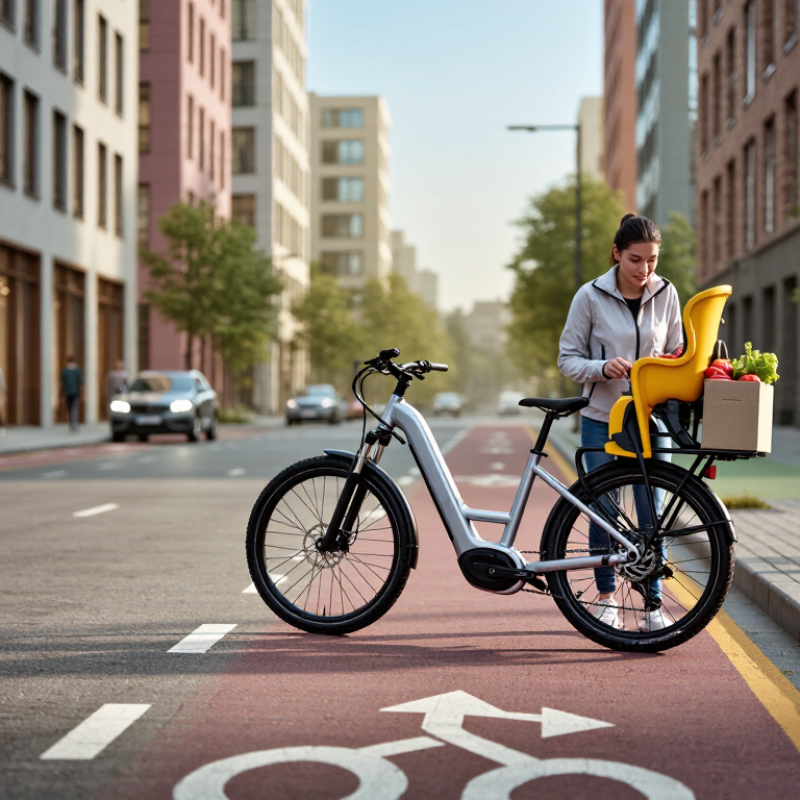
Before choosing an electric cargo bike, define what you will actually carry.
A child, two grocery bags, or construction tools create very different demands. Record the load’s weight, size, and position. A long, low frame may feel steadier with heavy cargo, while a compact frame can fit crowded storage areas. Measure your doorway, lift access, and parking space.
Your typical route matters just as much.
Note hills, road surfaces, traffic, wind, and daily distance. A five-mile trip with steep climbs can require more battery capacity than a flat ten-mile ride. Check the manufacturer’s stated payload, including the rider, passengers, and accessories. Leave a safety margin. Carrying the maximum load every day can reduce handling confidence and increase stopping distance.
I once underestimated how much wet groceries changed the bike’s balance. My first estimate was wrong.
A low-mounted load felt more stable than a tall, loose stack. Test the bike with realistic cargo before buying, not just an empty ride. Try starting uphill, braking gently, turning slowly, and placing both feet down. Watch how the motor responds at low speed.
Battery range claims are useful, but cold weather, hills, heavy loads, and frequent stops can reduce real-world distance. Keep a simple route log for one week. It may reveal that storage space matters more than extra speed.
10 Tips for Buying the Best Electric Cargo Bike?
Motor power should match your real cargo and terrain. A 250-watt motor may handle flat streets well, but steep hills need stronger torque. Check both nominal power and peak output. Peak figures describe short bursts, not continuous performance. I once tested a heavily loaded bike on a mild slope. It moved, but acceleration felt slow and unstable. That experience changed how I judge motor claims.
Battery range depends on more than the advertised number. Compare battery capacity in watt-hours, then consider rider weight, cargo, hills, wind, temperature, and assist level. A 600Wh battery may travel far on flat roads, but frequent climbs can reduce distance sharply. Plan for a safety margin of at least 20 percent. My early range estimates were too optimistic. Real routes are rarely ideal.
Charging options affect daily convenience. A removable battery helps apartment users and allows charging away from the bike. Check the charger’s output, charging time, cable quality, and replacement availability. Some riders prefer a spare battery for long deliveries or family trips. Others find the extra weight unnecessary. Charge on a stable, dry surface, and follow the supplied instructions. Test the battery connection before purchase. A loose connection can interrupt assistance during a busy ride. Ask whether local technicians can inspect the motor, battery, and wiring. Reliable support matters as much as impressive specifications.
Buying the best electric cargo bike starts with its real load capacity. Add the rider, passengers, bags, child seats, and accessories. Then leave a safety margin. A stated 200-kilogram limit is not a target. Test the bike with weighted bags, not just an empty showroom model. The EN 17860 cargo-cycle standards address structural strength, braking, stability, and passenger transport requirements. However, certification does not replace careful loading. A common mistake is trusting the maximum number without checking axle limits.
Frame design affects daily control. A low step-through frame helps when mounting with a child onboard. A long wheelbase can improve stability, but it may feel awkward in tight corners. Look for strong tubing, protected cables, secure footboards, and a kickstand that supports the loaded bike. Passenger safety deserves equal attention. Check adjustable restraints, handholds, wheel guards, foot protection, bright lights, reflectors, and reliable hydraulic or mechanical brakes. Test the brake levers while carrying realistic weight.
The U.S. Consumer Product Safety Commission recorded 233 deaths and about 19,000 emergency-department-treated injuries involving e-bikes and e-scooters from 2017 to 2022. That combined figure is not a cargo-bike failure rate, but it demands caution. NACTO reported 157 million shared micromobility trips in the United States and Canada during 2023, showing how frequently small electric vehicles enter busy streets. I would still question any bike that feels unstable when stopped. Passenger confidence matters more than a flashy specification.
| Tip | Buying Dimension | What to Check | Practical Benchmark or Requirement | Why It Matters | Passenger and Rider Safety Check |
|---|---|---|---|---|---|
| 1 | Total Load Capacity | Confirm the maximum permitted weight for the rider, passengers, cargo, and accessories combined. | Choose a model whose certified total system weight exceeds your expected everyday load by a comfortable margin. Do not treat the rear rack limit as the same as the whole-bike limit. | Overloading can reduce braking performance, handling stability, tire life, and component durability. | Ask for separate limits for the frame, cargo area, rear rack, child seats, and front or rear axle. |
| 2 | Frame Design and Wheelbase | Compare long-tail, front-loader, and compact cargo-bike layouts. Inspect frame welds, tubing, steering geometry, and the center of gravity. | A longer wheelbase and low cargo position generally improve stability, while a compact frame is easier to store and maneuver in tight spaces. | Frame geometry affects cornering, climbing, parking, turning radius, and how predictable the bike feels when fully loaded. | Test the bike with realistic weight; a stable unloaded ride does not guarantee stable handling when carrying passengers. |
| 3 | Passenger Seating and Restraints | Look for properly supported seats, foot protection, handholds, and age-appropriate restraints. | For children, use a suitable safety harness or approved child seat, secure footboards or footwell protection, and a guard or rail that prevents side falls. | Passengers can shift suddenly, especially during starts, stops, and turns. A stable seating area helps keep their weight controlled. | The restraint system should fit the passenger, fasten securely, and remain usable while the rider is wearing normal clothing. |
| 4 | Motor Assistance and Hill Performance | Evaluate motor type, rated power, torque, assistance modes, and performance on the hills you actually ride. | Mid-drive motors can use the bicycle gearing efficiently on climbs; hub motors can provide smooth assistance and simple operation. Compare torque claims using the same test method. | A heavily loaded cargo bike needs controlled, predictable assistance rather than only a high advertised peak figure. | Check walk-assist behavior, start-up control, throttle legality in your area, and whether assistance remains smooth at low speed. |
| 5 | Battery Capacity and Charging | Compare battery energy in watt-hours, charging time, removal convenience, weather protection, and replacement availability. | Battery energy can be estimated as voltage × amp-hours. Real range varies with load, hills, temperature, tire pressure, assist level, and stop-and-go riding. | Cargo loads and frequent climbs consume more energy than lightweight recreational riding. | Use a certified charger, keep charging areas dry and ventilated, and confirm that the battery management system protects against overcharge and overheating. |
| 6 | Braking System | Inspect brake type, rotor size, lever feel, cable or hose routing, and the availability of replacement pads. | Hydraulic disc brakes generally provide strong, consistent braking with less hand effort. Larger rotors can improve heat management, subject to the frame and fork manufacturer’s limits. | A loaded electric cargo bike has greater momentum and may need more braking force and heat control than a standard bicycle. | Look for independent front and rear brakes, good lever reach, and a parking or wheel-lock feature when the bike is stationary. |
| 7 | Tires, Wheels, and Stability | Check tire width, puncture protection, spoke strength, wheel size, valve type, and the recommended pressure range. | Wider cargo-rated tires can improve comfort and traction, but they must be inflated within the manufacturer’s stated range. Smaller wheels can lower the cargo deck and reduce the center of gravity. | Correct tire pressure supports handling, braking, range, and resistance to pinch flats. | Verify that tires and rims are rated for the intended total load and that fenders or guards cannot contact moving wheels. |
| 8 | Lighting and Visibility | Check front and rear lights, reflectors, side visibility, wiring protection, and whether the lights run from the main battery. | Choose permanently mounted lights that remain visible from the front, rear, and sides. Follow local rules for reflectors, lamps, and daytime or nighttime riding. | Cargo bikes can be longer and wider than regular bicycles, so other road users need clear visual cues about the bike’s full dimensions. | Make sure passenger covers, boxes, panniers, and trailers cannot block the rear light or reflectors. |
| 9 | Controls, Parking, and Theft Protection | Assess display readability, control placement, frame-lock compatibility, parking stability, and battery removal security. | Controls should be reachable without taking the rider’s attention away from traffic. A strong kickstand or center stand should support the loaded bike during loading and unloading. | A heavy cargo bike can tip while parked, and an unstable loading position increases the risk of passenger or cargo falls. | Apply the parking brake or lock before passengers board or exit, and use a secure lock through the frame when parking outside. |
| 10 | Serviceability, Fit, and Legal Compliance | Review sizing, maximum rider height, service access, spare parts, warranty terms, assembly quality, and local electric-bike regulations. | Test ride with the intended load and confirm that the bike’s speed class, motor rating, equipment, and passenger-carrying configuration are legal where it will be used. | Correct fit and dependable servicing affect control, uptime, operating cost, and long-term safety. | Check that the rider can stand over or control the bike, reach both brake levers, see around the load, and operate the bicycle confidently at low speed. |
When inspecting an electric cargo bike, I begin with the brakes, not the motor. A loaded bicycle needs predictable stopping power on wet streets and steep descents. Test both levers at walking speed, then repeat with a realistic load. Hydraulic systems often feel smoother, but adjustment quality matters more than marketing claims. Look for firm lever resistance, even pad contact, and rotors without deep scoring. Small noises deserve attention.
Tires should have strong sidewalls, practical tread, and enough width for the intended roads. I check pressure before every trial because underinflation can make steering vague. However, excessive pressure reduces grip and makes pavement bumps travel through the frame. A cargo bike should track straight when its front wheel crosses a shallow gutter. Try slow turns, emergency-style braking, and a tight parking maneuver. Do not rush this. Some bikes feel stable at speed but awkward near a curb. That weakness may matter daily.
Rider comfort includes saddle shape, handlebar reach, pedal position, and the effort needed to steer. After ten minutes, numb hands or cramped knees are useful evidence. The display should remain readable without forcing your eyes away from traffic. Check whether the controls work with gloves and whether the kickstand supports a loaded frame. I once ignored a slightly low handlebar and regretted it on a long delivery route. Fit is personal, yet discomfort is not a minor detail.
Tip 1: Inspect the frame, wheels, brakes, and electrical connections before every long ride.
Tip 2: Ask whether local technicians can service the motor and battery. Specialized repairs can create frustrating delays.
Tip 3: Check replacement prices for tires, brake pads, chains, and battery components. I once underestimated these small costs.
Tip 4: Read the warranty carefully. Confirm its duration, covered parts, labor terms, and exclusions.
Tip 5: Ask who handles warranty repairs and how shipping works. A generous warranty is less useful without practical support. Keep receipts and service records. They may protect your claim.
Tip 6: Test the lights, lock points, alarm features, and battery removal process.
Tip 7: Use a strong external lock in busy areas, even with built-in security.
Tip 8: Calculate total ownership costs, including insurance, charging, storage, maintenance, accessories, and depreciation.
Tip 9: Compare expected yearly costs with public transport or car expenses.
Tip 10: Consider payload needs, riding distance, and weather protection before choosing equipment. Security can be inconvenient. Still, replacing a stolen bike costs far more. My first estimate ignored storage space and winter maintenance, so your budget should include an uncomfortable margin.
Plainfield, 60585, 60544, 60586, Naperville, 60564, Bolingbrook, 60490, 60440, Romeoville, 60446, Will, Kendall, DuPage, Counties. Our auto repair shop in Plainfield, IL, has been serving the local area plus all surrounding Chicagoland since 1978.
• Computer Diagnostic • Brake Shop • Engine Replacement • Transmission Rebuild • Clutch Replacement • Differential Rebuild • Suspension Shop • Steering • Shocks & Struts • Heating & Cooling • Electrical • Exhaust Shop • Catalytic Converter Replacement • Alignment • Domestic & Foreign Vehicle Service • Auto Repair In Plainfield, IL • Auto Repair Shops Near Me • Towing Service Near Me