Auto Repair Shop In Plainfield, IL

Choosing a Deep Drill Machine for your business begins with the workpiece, not the brochure. Consider the materials, hole diameters, drilling depths, production volume, and required tolerances. Steel, cast iron, aluminum, and composite materials behave differently under cutting pressure. A machine suitable for aluminum may struggle with hardened steel.
Measure your real production needs. That matters. Review current drawings, tooling records, cycle times, and rejected parts. A deep hole may require stable guidance, high-pressure coolant, and reliable chip evacuation. Spindle speed alone does not prove performance. Check spindle torque, feed control, machine rigidity, and compatibility with your preferred drills. Ask suppliers for test cuts using your material and dimensions. Practical evidence is stronger than impressive specifications.
Total operating cost also deserves careful attention. Examine energy use, coolant requirements, tooling life, maintenance access, and operator training. A lower purchase price can become expensive when downtime increases. Service response matters. Confirm spare-parts availability, warranty conditions, installation support, and training from an established manufacturer. Review technical documents carefully, and request references from businesses with similar applications.
Do not ignore the operator’s experience. Their feedback may reveal vibration, awkward loading, or poor visibility before formal testing does. No machine is perfect. Your assumptions may be incomplete. Recheck them against production data.
The best Deep Drill Machine balances accuracy, reliability, safety, and realistic business goals. It should fit your workshop today while supporting future demand. Choose measurable performance over attractive promises.
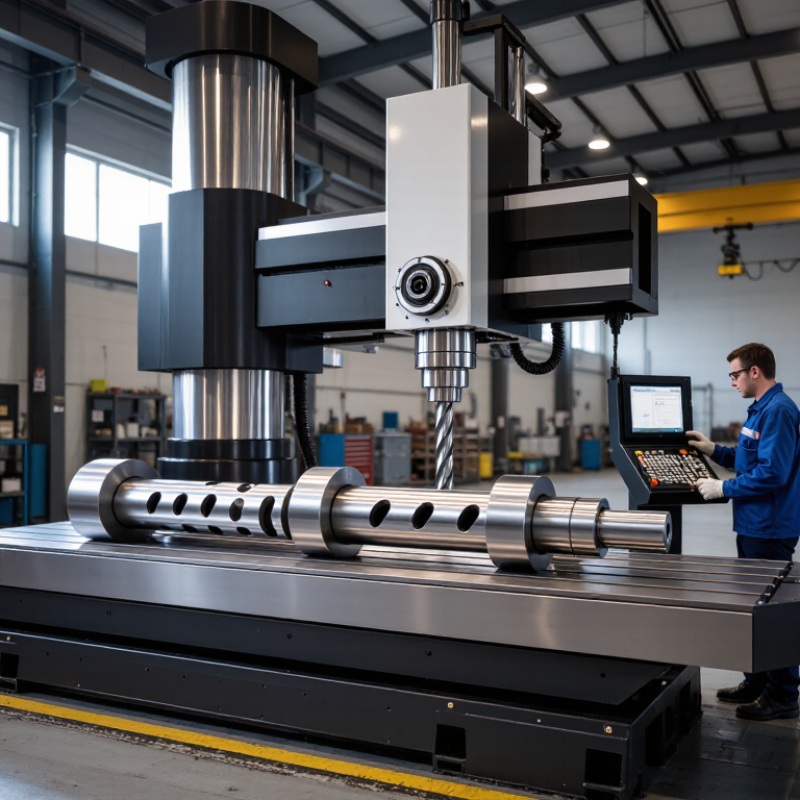
How to Choose a Deep Drill Machine for Your Business?
Define Your Deep Drilling Requirements and Production Goals
Choosing a deep drill machine starts with your parts, not the machine catalog. Record material type, hole diameter, depth, angle, tolerance, and surface finish. A steel shaft may require different cutting conditions than an aluminum housing. Also measure your largest workpiece, including fixture space and loading access. Small details often cause expensive delays.
I once reviewed a production plan that focused only on drilling speed. It ignored chip evacuation and coolant filtration. The machine met its advertised rate, but operators stopped frequently to clear blocked holes. That experience changed my evaluation process. I now request sample drilling, cycle-time records, tool-life data, and inspection results. Measure twice.
Set clear production goals before comparing machine specifications. Estimate daily parts, yearly volume, shift hours, and acceptable downtime. Decide whether flexibility or maximum output matters more. A machine for prototypes may need quick setup and broad tooling options. A high-volume line may need automatic loading, stable temperature control, and repeatable positioning. Confirm spindle power, feed control, coolant pressure, and maintenance access. Ask for documented accuracy under realistic workloads, not only ideal test conditions. A spreadsheet can still mislead when assumptions are weak. Review rejected parts, operator feedback, and future product changes before approving the purchase.
| Requirement Dimension | Typical Planning Data | Recommended Target or Range | Production Implication | Machine Selection Consideration |
|---|---|---|---|---|
| Hole Diameter | Finished hole diameter required by the component drawing | 3–50 mm for common gun-drilling applications | Smaller diameters generally require more precise tooling, runout control, and chip evacuation. | Choose a spindle, guide-bushing system, and tooling package designed for the required diameter range. |
| Hole Depth | Maximum finished depth measured from the entry face | 10–100 × hole diameter; for example, 20 mm diameter × 1,500 mm depth equals 75:1 | Higher depth-to-diameter ratios increase the need for rigid workholding, accurate guidance, and stable coolant delivery. | Confirm the effective drilling stroke, bed length, workpiece support, and chip-removal capacity. |
| Workpiece Material | Material grade, hardness, tensile strength, and heat-treatment condition | Common materials include carbon steel, alloy steel, stainless steel, aluminum alloys, and cast iron | Material properties directly affect cutting speed, feed rate, tool life, heat generation, and coolant requirements. | Verify spindle torque, motor power, tooling compatibility, and recommended cutting-fluid filtration for the hardest material. |
| Material Hardness | Hardness before and after machining | Approximately 150–300 HB for many general steel applications; harder materials require process validation | Harder workpieces can reduce tool life and may require lower cutting parameters or specialized tool materials. | Request cutting trials when hardness exceeds the normal range or when the part has been heat-treated. |
| Required Hole Tolerance | Allowed variation in hole diameter | Typical planning range: ±0.01–±0.05 mm, depending on diameter, depth, material, and process | Tighter tolerances may require finishing operations such as reaming, honing, or internal grinding. | Assess machine rigidity, spindle accuracy, tool runout, thermal stability, and the need for secondary finishing. |
| Straightness Requirement | Permitted centerline deviation over the full hole depth | Typical planning target: approximately 0.05–0.15 mm per 1,000 mm for suitable deep-drilling conditions | Longer holes and less rigid workpieces make straightness more difficult to maintain. | Prioritize guide-bushing alignment, machine rigidity, spindle support, workpiece stability, and reliable chip evacuation. |
| Production Quantity | Expected annual volume and batch size | Prototype: 1–20 parts/year; low volume: 20–500; medium volume: 500–5,000; high volume: over 5,000 | Higher volumes justify automation, quick-change tooling, process monitoring, and dedicated fixtures. | Select between a flexible single-spindle system, multi-spindle configuration, pallet handling, or robotic loading. |
| Target Machine Utilization | Planned productive operating time after setup, inspection, and maintenance | 60–75% for a balanced planning target; higher utilization requires mature processes and reliable automation | Utilization affects the number of machines required to meet delivery commitments. | Include setup time, tool changes, loading, inspection, maintenance, and unplanned downtime in capacity calculations. |
| Drilling Feed Rate | Linear cutting feed selected for material, diameter, tool, and coolant conditions | Initial planning range: 30–150 mm/min; validate through tooling trials | Higher feed can shorten cycle time but may increase torque, chip load, tool wear, and hole-deviation risk. | Check whether the CNC control supports stable low-speed feed regulation and adjustable feed overrides. |
| Spindle Speed | Rotational speed based on cutting speed and tool diameter | Common planning range: 500–6,000 rpm, depending on tool diameter and material | Small tools usually require higher rotational speed, while larger tools require greater torque at lower speed. | Match the spindle speed range and torque curve to the smallest and largest tools in the planned product mix. |
| Spindle Power | Power needed to maintain cutting performance under the maximum planned load | Approximately 7.5–30 kW for many general-purpose deep-drilling cells | Insufficient power can cause speed loss, poor surface finish, overheating, and premature tool failure. | Compare continuous power, peak power, spindle torque, and duty cycle rather than evaluating motor kilowatts alone. |
| High-Pressure Coolant | Coolant pressure and flow required for cutting and chip evacuation | Typical planning range: 20–70 bar and approximately 20–100 L/min | Deep holes rely on coolant to remove chips, control temperature, and protect the cutting edge. | Specify pump capacity, filtration accuracy, tank volume, temperature control, and coolant delivery through the tool or spindle. |
| Filtration Requirement | Removal of chips and fines from the recirculating coolant | Typical filtration range: 25–100 microns, based on tooling and process requirements | Poor filtration can block coolant passages, damage pumps, and recirculate abrasive particles. | Choose a filtration system that supports the required flow rate and can be cleaned without excessive production interruption. |
| Workpiece Size and Weight | Maximum length, diameter, height, and mass of the complete component | Define the largest part envelope plus clearance for fixtures, tooling, chip removal, and operator access | Large or heavy parts may require additional steady rests, support rollers, or special loading equipment. | Check table capacity, chuck or fixture size, machine travel, loading height, floor space, and foundation requirements. |
| Setup and Changeover Time | Time required to change fixtures, tools, programs, and work offsets | Planning target: 15–60 minutes for repeat jobs with standardized tooling | Long changeovers reduce effective capacity, particularly for high-mix, low-volume production. | Look for modular fixtures, tool presetting, stored CNC programs, quick-connect coolant systems, and automatic probing. |
| Tool Life and Consumables | Expected cutting length or number of holes per tool before replacement | Establish a measured baseline during trials; monitor tool wear rather than relying only on fixed time intervals | Tool cost and tool-change frequency can materially affect the cost per hole. | Evaluate tool monitoring, automatic compensation, spare-tool storage, and access to suitable regrinding or replacement services. |
| Inspection Method | Required checks for diameter, depth, straightness, surface finish, and burr condition | Use calibrated gauges, air gauges, bore gauges, coordinate measurement, or specialized deep-hole inspection equipment as required | Inspection time must be included in the production cycle and quality-control plan. | Consider in-process probing or automated inspection when tolerances are tight or production volume is high. |
| Surface Finish | Required internal bore roughness | Typical drilled-hole planning range: approximately Ra 1.6–6.3 µm; finishing may be required for lower values | Surface finish depends on tool geometry, edge condition, feed, material, coolant, and vibration control. | Confirm whether the machine must perform drilling only or also support reaming, honing, or other finishing operations. |
| Automation Level | Manual, assisted, or fully automated loading and process control | Manual loading for small batches; pallet or robotic loading for repetitive medium- and high-volume production | Automation can improve consistency and utilization but increases initial investment and integration requirements. | Base the decision on annual volume, part weight, labor availability, mix stability, and required unattended operating time. |
| Production Cost Target | Acceptable cost per finished hole or component | Calculate using machine rate, labor, tooling, coolant, energy, inspection, maintenance, scrap, and depreciation | The lowest purchase price may not deliver the lowest cost per part over the machine’s operating life. | Compare total cost of ownership and expected capacity over a three- to seven-year planning period. |
| Expansion Requirement | Expected changes in part sizes, materials, volumes, or processes | Allow capacity for approximately 15–30% growth when demand forecasts are uncertain | A machine selected only for current production may become a bottleneck as product requirements expand. | Prefer suitable spindle capacity, modular fixturing, flexible CNC control, and sufficient travel for the planned product roadmap. |
