How to Choose a Ball Bearing CNC Machine?
Choosing a Ball Bearing Cnc Machine is not simply a matter of comparing prices, spindle speed, or advertised accuracy. The right machine must match the bearing’s size, material, tolerance, production volume, and finishing requirements. A small bearing race may need a rigid spindle, stable temperature control, and precise tool compensation. A heavier component demands different workholding and cutting forces. Details matter.
Tedric A. Harris, a respected authority in rolling-bearing analysis, stated, “The life of a rolling bearing is defined as the number of revolutions.” His principle remains useful here. Machine selection influences raceway accuracy, surface finish, heat generation, and ultimately bearing life. A fast spindle is not automatically better. It may create vibration, thermal growth, or premature tool wear.
This guide examines the practical questions behind a reliable Ball Bearing Cnc Machine. It considers CNC axis accuracy, spindle stiffness, chuck performance, coolant delivery, automation, inspection systems, and after-sales support. It also compares turning, grinding, and hybrid configurations for different production goals. The cheapest option can become expensive when rejected parts fill the inspection table.
Real workshops are rarely perfect. Material batches vary. Operators make mistakes. Maintenance is sometimes delayed. Therefore, the best choice should tolerate reasonable human and process variation. Buyers should request test cuts, inspect sample roundness, and verify repeatability under realistic conditions. One specification sheet cannot reveal everything. A careful decision connects machine capability with actual bearing production, not with impressive marketing language.
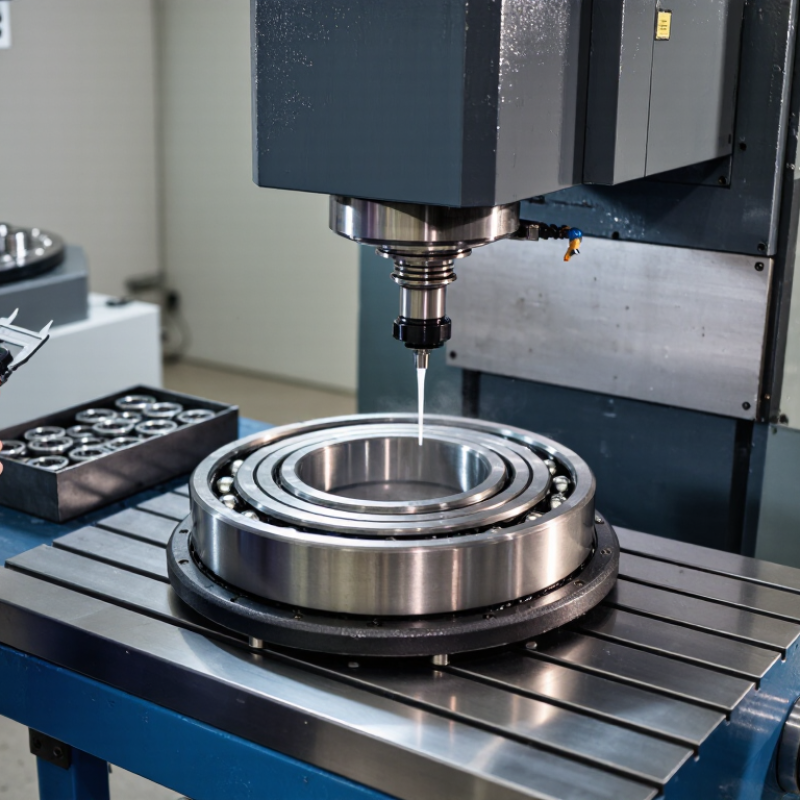
Understanding Ball Bearing CNC Machine Types
How to Choose a Ball Bearing CNC Machine?
Understanding Ball Bearing CNC Machine Types
When choosing a ball bearing CNC machine, identify the bearing component first. Ring races usually need CNC turning, hard turning, grinding, and superfinishing. Balls require dedicated grinding and lapping equipment. Cages often suit high-speed milling or stamping, depending on material and geometry. A Swiss-type CNC machine can produce small cages and precision spacers efficiently. Larger rings may need a rigid turning center with live tooling. The machine type follows the surface, not the catalogue label. This distinction is often missed.
Market data supports a capacity-focused decision. Mordor Intelligence estimates the global ball bearing market will grow from about USD 23.1 billion in 2025 to USD 29.5 billion by 2030. That growth does not justify buying the fastest machine automatically. It may reward stable cycle times, automatic loading, and measurable thermal control.
For raceways, compare grinding machines by radial accuracy, roundness, dressing control, and coolant filtration. A five-axis machining center helps when one setup reduces alignment errors. However, it can be excessive for repetitive ring production. Check spindle runout, probe repeatability, vibration behavior, and service access on the factory floor. Ask for sample parts, not only brochures. A 2024 Grand View Research report valued the CNC machine market at roughly USD 88 billion in 2023. That figure signals investment, not guaranteed quality. I would leave room for doubt: a cheaper two-machine cell may outperform one complex unit when maintenance skills are limited.
Evaluating Control Systems, Tooling, and Maintenance Needs
Choosing a ball bearing CNC machine requires more than checking spindle speed. The control system determines how accurately the machine handles interpolation, probing, and compensation. Look for stable five-axis control, clear alarm histories, and accessible parameter backups. ISO 230-2 provides a recognized method for testing axis positioning accuracy and repeatability. Ask for measured results, not only brochure claims. Small errors become visible on bearing seats.
Tooling decisions should match the bearing material, size, and production volume. Rigid holders reduce vibration, while preset tools shorten setup time. A 2023 industry survey by the Manufacturing Technology Association reported that skills shortages remained a major manufacturing constraint. Therefore, intuitive control screens and guided tool measurement can reduce dependence on one experienced operator. Keep it practical. Fancy functions may remain unused.
Maintenance planning is equally important. The U.S. Department of Energy’s Operations and Maintenance Best Practices guide reports that predictive maintenance can reduce costs by roughly 8–12% compared with preventive maintenance, and much more compared with reactive repairs. Monitor spindle temperature, lubrication flow, vibration, and coolant contamination. I would not trust a sensor without checking it against manual observations. That is a common weakness. Schedule calibration through ISO 230-based checks, inspect chuck runout, and record bearing-seat dimensions after extended production. A cheaper machine may become expensive when missed maintenance interrupts a long batch.
How to Choose a Ball Bearing CNC Machine?
This practical weighting model prioritizes the factors that most directly affect bearing accuracy, repeatability, productivity, and long-term operating cost. Control systems should support precise positioning and reliable monitoring; tooling should match bearing materials and tolerances; maintenance access should reduce downtime and simplify lubrication, inspection, and component replacement.
Selecting a Machine Based on Cost, Safety, and Long-Term Value
Choosing a ball bearing CNC machine should begin with the work, not the sales price. Define material, cutting size, tolerance, duty cycle, and expected weekly hours. A compact machine may suit light aluminum work, while continuous steel cutting demands stronger construction and cooling. Ask for test cuts using your drawings. Inspect edge quality, noise, vibration, and repeatability. These details reveal more than a polished specification sheet. Keep records.
Cost includes tooling, electricity, installation, training, maintenance, and downtime. Request a written service schedule. Confirm replacement prices for bearings, belts, filters, and critical electronics. Check whether trained technicians and clear manuals are available in your region. A low purchase price can become expensive after one neglected alignment problem. However, buying the largest machine is not automatically wise. Unused capacity still occupies floor space and ties up cash.
Safety deserves a physical inspection before payment. Look for full guarding, an accessible emergency stop, secure workholding, interlocks, and clear chip-control procedures. Test it first. Verify electrical requirements and coolant handling with a qualified professional. Operators need practical training, not only a signed checklist. I would budget for calibration and preventive maintenance from the first month. A first comparison can miss hidden setup costs, so arrange a trial and review the risks honestly. Record bearing temperature, vibration, and calibration results after each service visit.

