Auto Repair Shop In Plainfield, IL
Choosing the Best M6.5 Scanning Lens requires more than comparing diameter, price, or catalog resolution. In global machine-vision projects, the lens must match the sensor, working distance, scan speed, illumination, and mechanical interface. A small mismatch can produce blurred edges, uneven magnification, or visible distortion across a production line.
MarketsandMarkets reported that the global machine-vision market was valued at approximately USD 12.2 billion in 2023. Its forecast also indicates continued growth through 2028. Grand View Research similarly identifies automation, inspection, and logistics as major demand drivers. These reports do not measure the M6.5 Scanning Lens segment directly. That limitation matters. Buyers should treat broad market figures as context, not as proof of lens performance.
Dr. Alexander Hornberg, author of Handbook of Machine Vision, offers a useful systems perspective: “The lens must be judged as part of the complete imaging chain.” That principle is easy to overlook. A lens may show excellent center sharpness yet lose detail near the scan margins. A polished metal surface may also reveal flare that was invisible during bench testing. Practical evaluation should include distortion charts, MTF data, coating information, sensor compatibility, and sample images at the intended working distance. Country-specific supply, calibration support, and replacement availability deserve attention too. The “best” choice is rarely universal. It depends on the inspection task, and that is where many buying guides remain too confident.
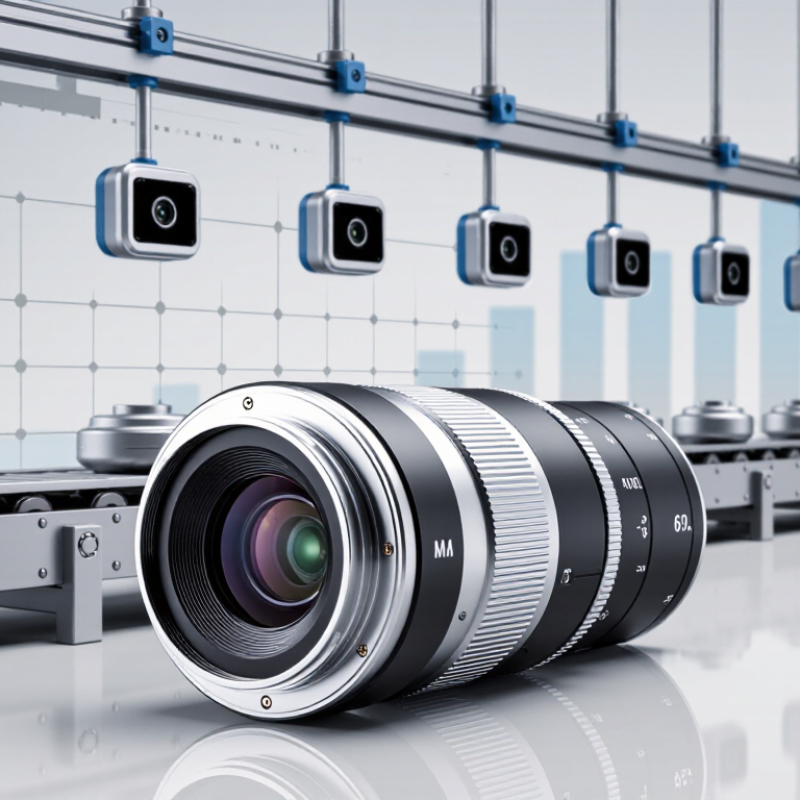
An M65 mount indicates a nominal 65 mm thread diameter. It does not guarantee sharp imaging. Thread pitch matters, such as M65×0.75 or M65×1. Check the camera interface before ordering. A small mismatch can damage threads or create tilt. In practical inspection work, I measure flange distance with a gauge, not a ruler alone.
MTF shows how well a lens preserves contrast at different spatial frequencies. ISO 12233:2017 evaluates resolution through spatial frequency response. Many machine-vision teams review MTF50, where contrast falls to 50 percent. For a 5 μm pixel sensor, the Nyquist frequency is 100 line pairs per millimeter. A lens should support that range carefully. Yet published curves may represent ideal center performance.
The EMVA 1288 standard separates spatial noise, temporal noise, sensitivity, and dynamic range. These measurements help distinguish lens softness from sensor limitations. A useful setup may target 40–60 lp/mm across the field, depending on working distance and aperture. Stopping down can improve edge sharpness, but diffraction eventually reduces resolution. I have seen attractive MTF charts fail at the corners. Sometimes, the chart is correct. The application was misunderstood. Check distortion, chief-ray angle, illumination, and thermal stability before approving a global purchase.
For an M65 scanning lens, working distance should match the actual inspection setup. Measure from the front lens surface, not the camera sensor. A 100 mm working distance may look suitable, yet cables, lighting, and protective glass can reduce usable space. I prefer a lens with a stable distance tolerance, especially when products move along a conveyor. Small changes can affect focus and edge sharpness.
Focal Length and Field Coverage Focal length controls field coverage and viewing detail. A shorter focal length captures more area, but may increase perspective effects. A longer focal length offers tighter framing and often improves measurement consistency. Check the required field of view with the sensor’s active dimensions. Do not rely only on a catalog diagram. Real assemblies often differ.
Distortion and Calibration Distortion below 1% is a strong target for dimensional scanning. Confirm how the figure was measured. It should state the test distance, image area, and distortion type. Use a calibrated grid to verify barrel or pincushion distortion during acceptance testing. Software correction helps, but it should not hide poor optical performance. I once judged a lens from its center sharpness alone. The corners later showed visible stretching. That mistake changed my evaluation process.
Global buyers should also request focal shift data, working-distance tolerances, and calibration guidance. Mechanical compatibility matters too. Confirm the M65 interface, sensor coverage, filter space, and mounting stability before ordering. A technically impressive lens can still fail when the complete system is ignored.
For global buyers, an M65 scanning lens should be judged by usable performance, not only catalog specifications. Galvo speeds up to 2,000 mm/s can shorten marking cycles and support fast production lines. However, that speed is practical only when the scanner, control system, and material response remain synchronized. Speed is not everything.
Field uniformity deserves equal attention. A well-adjusted lens should keep line width, energy density, and focus consistent from the center to the outer edges. During evaluation, inspect a test grid across the full working field. Measure several points, including the corners. Edges matter. Uneven focus may produce darker marks, softened details, or inconsistent engraving depth.
A reliable selection process also checks thermal stability after extended operation. Run repeated patterns for 30 to 60 minutes, then compare the first and final samples. Small drift can affect accuracy, especially on fine text or compact codes. The first test may look excellent, yet later samples can reveal hidden variation. That is worth admitting.
Buyers should request measured field-uniformity data, focal tolerance, scanning speed conditions, and calibration guidance. Ask how results were obtained. A claimed 2,000 mm/s may use a simple vector pattern, while dense graphics require slower motion. I would also compare spot shape across the field, because a fast system with poor edge control creates rework. Performance is measurable. Use samples, not promises.
Best M65 Scanning Lens for Global Buyers?
Global machine vision demand is expanding. MarketsandMarkets estimated the machine vision market at USD 12.3 billion in 2023, with growth toward USD 19.7 billion by 2028. For an M65 scanning lens, this growth increases pressure on measurable quality, not marketing language. ISO 10110 drawings help buyers verify optical details, including surface quality, centering, coatings, and tolerances. However, ISO 10110 is a documentation standard, not a guarantee of image performance. That distinction matters.
IP65 protection offers practical value in dusty production areas. Under IEC 60529, the first digit protects against dust ingress, while the second resists low-pressure water jets. A sealed lens housing may survive routine cleaning better than an exposed design. Still, sealing can fail around adapters, cables, or damaged gaskets. We have seen installation errors create more risk than the lens itself. Do not assume IP65 means immersion protection.
CE marking also deserves careful checking. It indicates conformity with applicable European requirements, but it is not a universal optical-performance certificate. Buyers should request the Declaration of Conformity and identify the relevant directives. Interact Analysis reported continued investment in automated inspection across manufacturing, yet field conditions remain inconsistent. Test the M65 lens with the actual sensor, lighting, working distance, and target material. A small focus shift can become a large inspection error. The specification looked adequate. The production image did not.
The IP65 rating has two independently defined protection levels: the first digit “6” means dust-tight protection, while the second digit “5” means protection against water jets from any direction.
ISO 10110 is used for technical drawings of optical elements and systems, helping buyers review optical specifications consistently. CE marking indicates that the manufacturer declares conformity with applicable European Union requirements; it is not a performance grade. Buyers should request the optical drawing, IP test evidence, and applicable CE documentation before purchase.
Choosing the best M65 scanning lens depends on wavelength, field size, and marking material.
Wavelength changes everything.
A 355 nm lens suits fine features on polymers, ceramics, and coated electronics. Its shorter wavelength supports smaller focused spots, but throughput can fall when power and pulse energy remain limited.
A 532 nm M65 lens offers a useful middle ground for colored plastics, thin films, glass, and selected metals. Green light can improve absorption where infrared marking performs weakly.
A 1064 nm lens remains the practical choice for metals, anodized aluminum, and general industrial marking. It usually handles higher power more comfortably, though its spot size is commonly larger.
The correct comparison should include scan field, working distance, distortion, coating range, and edge sharpness—not only focal length.
Market data supports continued demand for flexible laser processing.
MarketsandMarkets reported that the global laser processing market could grow from about USD 7.3 billion in 2023 to USD 11.8 billion by 2028, at roughly 10.1% CAGR. Grand View Research also estimated strong growth in laser marking equipment through 2030.
These figures indicate wider adoption, but they do not prove one M65 lens fits every system. In practical commissioning, thermal drift and galvo calibration can matter more than brochure resolution.
That is easy to overlook. A better buyer test uses the actual substrate, pulse settings, and required field size before purchase.
Plainfield, 60585, 60544, 60586, Naperville, 60564, Bolingbrook, 60490, 60440, Romeoville, 60446, Will, Kendall, DuPage, Counties. Our auto repair shop in Plainfield, IL, has been serving the local area plus all surrounding Chicagoland since 1978.
• Computer Diagnostic • Brake Shop • Engine Replacement • Transmission Rebuild • Clutch Replacement • Differential Rebuild • Suspension Shop • Steering • Shocks & Struts • Heating & Cooling • Electrical • Exhaust Shop • Catalytic Converter Replacement • Alignment • Domestic & Foreign Vehicle Service • Auto Repair In Plainfield, IL • Auto Repair Shops Near Me • Towing Service Near Me