Auto Repair Shop In Plainfield, IL
Choosing the best Heat Gun depends less on the highest temperature and more on control. A model that reaches 1,000°F may sound impressive, but that number means little if its airflow is difficult to adjust. Picture stripping paint from a narrow window frame: a steady stream of heat, a comfortable grip, and a suitable nozzle can matter more than extra power. Small details count.
As a practical buying principle, “Choose the Heat Gun you can control, not simply the one that gets hottest.” This is an original editorial line, not a quotation attributed to a named expert. Without a verifiable source, attaching it to an industry specialist would create a misleading endorsement. A trustworthy guide should distinguish tested specifications from marketing claims—and expert quotations from invented ones.
The sections ahead compare temperature range, airflow settings, heat-up time, accessories, and safety features. They also consider how different tools perform on paint removal, shrink tubing, craft work, and other common tasks. Corded and cordless models each have trade-offs; neither is automatically best. A lower-cost tool may suit occasional projects, though its controls or build may disappoint after repeated use. That part is easy to overlook.
There is no perfect pick for every workshop. The right choice depends on materials, frequency of use, and how precisely heat must be applied. A little uncertainty is honest. A buyer’s actual projects should guide the final decision.
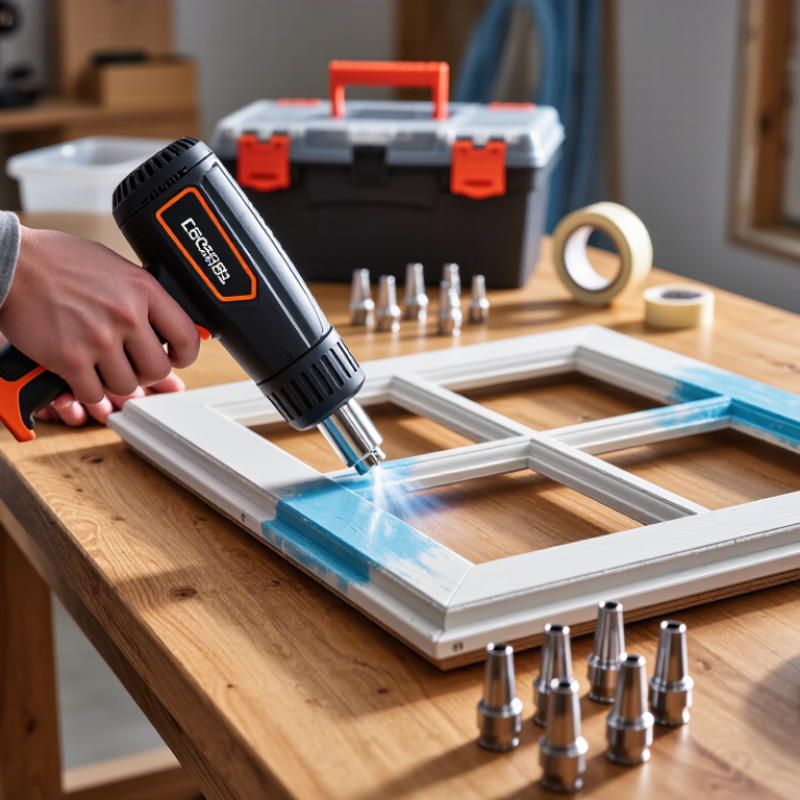
What Is the Best Heat Gun to Buy?
How a Heat Gun Works and What It Can Be Used For
A heat gun draws in air, passes it over an electrically heated element, then pushes hot air through its nozzle. Many models let you adjust heat and airflow, giving better control for different materials. The tool can soften adhesive, shrink heat-shrink tubing, loosen stuck fasteners, and gently shape some plastics. It sounds simple. It isn’t. A small change in distance can overheat a surface or damage nearby parts. The IEC 60335-2-45 safety standard covers portable heating tools, including heat guns, and underscores the need for safe tool design and use.
Power ratings also help estimate energy use. The U.S. Department of Energy explains that kilowatt-hours equal watts multiplied by hours, divided by 1,000. So a 1,500-watt heat gun running for 10 minutes uses about 0.25 kWh at full power. Actual use varies with the setting and how often the element cycles.
Tips: Start with low heat and test an unseen spot. Keep the nozzle moving, use a heat-resistant surface, and wear eye protection. Never point it at skin or leave it running unattended. Let the tool cool on a stable, clear surface. Small detail, big difference.
Choosing a heat gun starts with the material and control you need, not the highest wattage. A basic single-temperature model can handle occasional tasks, such as softening adhesive or shaping heat-shrink tubing. Its limited settings make delicate work harder, though. Small jobs differ.
A variable-temperature gun suits mixed projects, from warming plastic to removing old finishes where heat is appropriate. Look for clear controls and a stable low setting; these matter more than flashy extras. A dual-temperature model is simpler, but switching between two preset levels can feel awkward when a material needs careful warming. I still find airflow easy to underestimate. Too much can shift lightweight pieces or concentrate heat unevenly.
For detailed work, a compact precision gun offers a narrower stream and easier handling around small areas. Larger workshop tasks may call for a more powerful unit, but extra heat is not automatically useful. Check the temperature range, airflow options, grip, and included nozzle shapes before buying. Test on scrap material first, keep the nozzle moving, and follow the material maker’s guidance. Ventilation matters, especially when warming coatings or plastics. A short cord can also become irritating during careful bench work.
Compare typical working temperature ranges to find a heat gun suited to the job.
An adjustable-temperature heat gun is a versatile choice for mixed projects. Use lower heat for delicate materials and increase it gradually as needed. These ranges are general guidance; the material and tool can affect the required temperature.
A heat gun’s temperature range matters less than how precisely it holds a setting. Compare minimum and maximum temperatures, adjustment steps, and airflow controls; delicate work needs gentle heat, while thick paint may need more. A display helps, but it does not prove the nozzle temperature matches the reading. A spec sheet can still mislead. Look for overheat protection and a cool-down setting, then check whether the manual explains safe nozzle distances and suitable materials. The European Commission’s 2023 Safety Gate report recorded 3,412 alerts across product categories. It does not isolate heat guns, but it underlines why clear safety information and traceable product documentation matter.
Check the practical details, too. A stable stand lets you set the tool down without aiming a hot nozzle at the bench. A long, flexible cord can keep the work area less cramped. Compare weight and grip shape if you expect to use it overhead or for longer sessions. Interchangeable nozzles can concentrate or spread airflow, but confirm that replacements are available and fit securely. Noise and airflow figures are often missing from listings. That matters. If possible, test the controls with gloves on; tiny buttons can be awkward during a real job. One trade-off remains: a higher maximum temperature is not automatically an advantage if the tool offers poor low-temperature control.
Choosing the best heat gun starts with the material, not the highest temperature on the box. For paint softening, craft work, or shrink tubing, variable temperature and airflow help prevent scorching. A narrow nozzle concentrates heat; a wider one spreads it across a panel. I would not treat peak temperature as a quality score. It is only one specification.
For occasional home repairs, a basic adjustable model may be enough. Frequent workshop use can justify a stronger motor, a stable stand, and overheat protection. Check the weight and grip, too; a heavy tool becomes tiring during a long session. On a 120-volt circuit, a 1,500-watt unit draws about 12.5 amps, so consider what else shares that circuit. The U.S. Bureau of Labor Statistics reported 2.6 million nonfatal workplace injury and illness cases in private industry in 2023. That broad figure is not heat-gun-specific, but it reinforces the value of sensible handling and safety features. Look for certification recognized in your region, clear temperature settings, and a cord that reaches your work area. Cheap can work. Avoid buying more power than the task needs.
A safe heat gun should offer variable temperature control, a clear display, overheat protection, and a stable stand for cooling. Check that the handle stays insulated and the cord has no cracks or loose connections. A built-in cool-down setting is useful, but it does not make the nozzle safe to touch. Small details matter.
NFPA’s 2023 report, using U.S. data from 2016–2020, estimates an annual average of 44,210 home fires involving heating equipment. That category is broad and does not describe heat guns alone, but it shows why heat deserves respect. Keep the nozzle moving and away from combustibles. Work on a clear, heat-resistant surface, and ventilate the area when heating coatings or plastics. I still find it easy to underestimate how long a nozzle stays hot.
Use the tool only while you can watch it. Set it on its stand between tasks, unplug it before changing attachments, and let it cool fully before storage. Wear eye protection, and use heat-resistant gloves when appropriate; gloves do not make contact with the nozzle safe. A few seconds of checking the work area can prevent a rushed mistake.
| Check | What to Look For | Why It Matters | Safe Handling Practice |
|---|---|---|---|
| Temperature control | Adjustable heat settings, preferably with a clearly marked temperature range. | Lower settings can reduce the chance of scorching or damaging heat-sensitive materials. | Start at a low setting and test on an inconspicuous area before increasing heat. |
| Airflow control | More than one fan-speed setting or another clear way to control airflow. | Controllable airflow can help direct heat more precisely and limit disturbance of nearby material. | Keep the nozzle moving and maintain a suitable distance from the work surface. |
| Overheat protection | A documented thermal cut-out or other overheat-protection feature. | Protection can help reduce the risk of damage if the tool overheats; it does not replace careful use. | Do not block the air inlet or outlet. Stop use if the tool behaves unusually or becomes excessively hot. |
| Stable resting position | A stable stand or a design that can rest securely with the hot nozzle pointed away from surfaces and people. | The nozzle and nearby surfaces can remain hot after the tool is switched off. | Place the tool on a stable, heat-resistant surface during pauses; never leave it unattended while hot. |
| Grip and controls | A secure, comfortable grip and controls that are easy to operate without changing hand position. | Good handling helps maintain control and keep hands away from the hot nozzle. | Hold the tool by its handle, keep the nozzle pointed away from yourself and others, and avoid touching hot attachments. |
| Cord and electrical condition | A cord with suitable length for the work area and no visible damage; follow the tool’s electrical instructions. | A damaged or poorly positioned cord can create electric-shock, trip, or heat-damage hazards. | Inspect the cord before use, keep it away from the hot nozzle, and unplug the tool before changing accessories or storing it. |
| Nozzles and accessories | Compatible attachments with clear fitting instructions and a secure connection. | Attachments can concentrate or redirect heat, so incorrect use may overheat a small area. | Fit accessories only as instructed, and let them cool before removal or handling. |
| Work-area safety | A tool whose instructions clearly explain safe operation, cooling, and storage. | Heat guns can ignite nearby combustible materials and produce fumes when heating coatings, plastics, or adhesives. | Clear flammable items, provide ventilation, wear suitable eye protection, and follow material-specific warnings. Do not use a heat gun to remove paint that may contain lead. |
| Cooldown and storage | Instructions for switching off, cooling the tool, and storing it safely. | Residual heat can burn people or ignite materials even after power is disconnected. | Switch off and unplug after use; allow the tool and nozzle to cool fully in a safe place before storage. |
Plainfield, 60585, 60544, 60586, Naperville, 60564, Bolingbrook, 60490, 60440, Romeoville, 60446, Will, Kendall, DuPage, Counties. Our auto repair shop in Plainfield, IL, has been serving the local area plus all surrounding Chicagoland since 1978.
• Computer Diagnostic • Brake Shop • Engine Replacement • Transmission Rebuild • Clutch Replacement • Differential Rebuild • Suspension Shop • Steering • Shocks & Struts • Heating & Cooling • Electrical • Exhaust Shop • Catalytic Converter Replacement • Alignment • Domestic & Foreign Vehicle Service • Auto Repair In Plainfield, IL • Auto Repair Shops Near Me • Towing Service Near Me